Latest news, analysis and data in the agriculture sector.
news
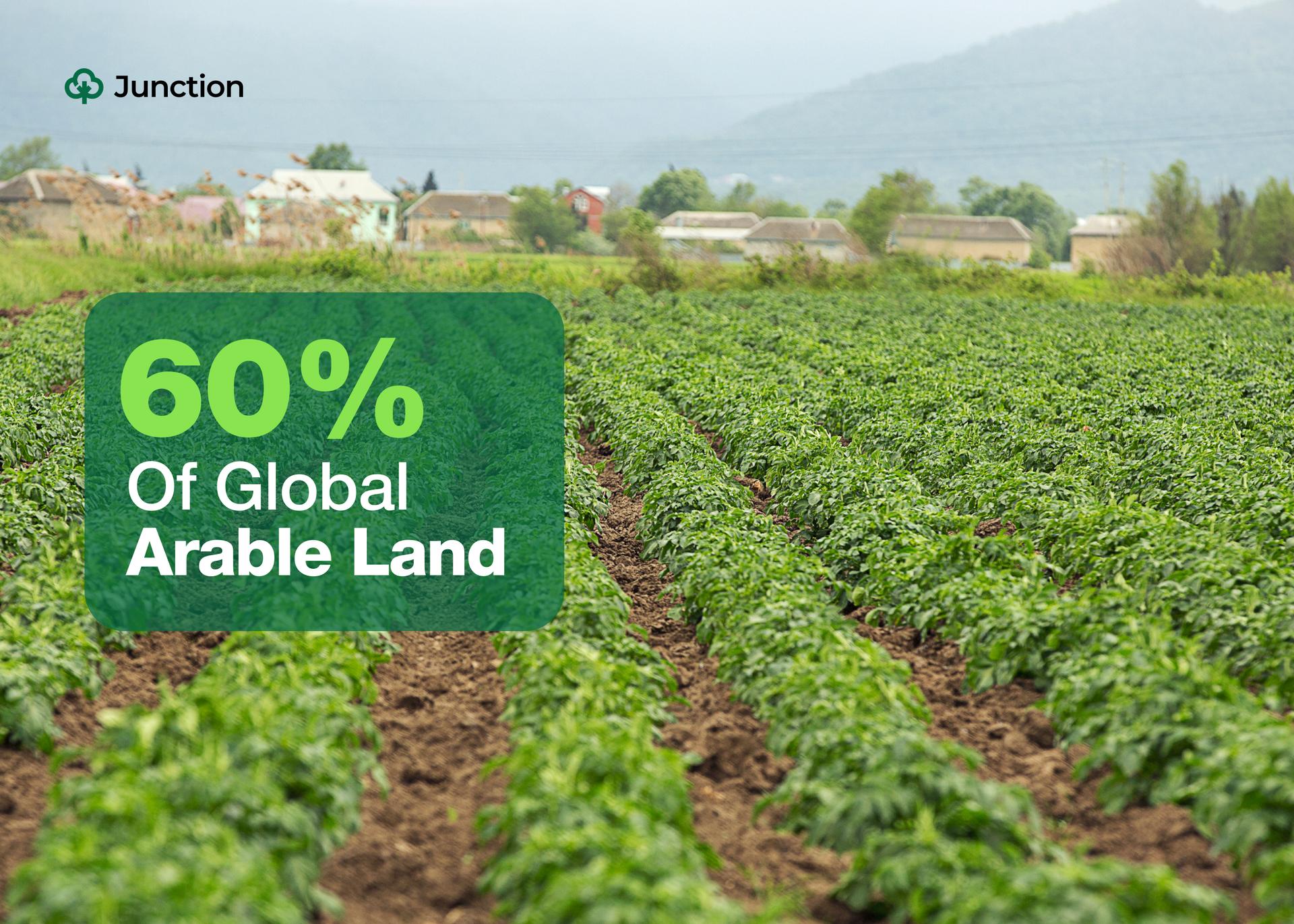
Africa Has 60% of Global Arable Land—but 77% of Its Nations Are Net Food Importers
By Noah Aderoju | Nov 06, 2025 | 0 comments

News in Brief
- -Despite owning over 60% of the world’s arable land, 42 African countries remain net food importers, spending billions on staples.
- -An LSE scholar, Prof. David Luke, champions regional trade like the AfCFTA as a key opportunity if cross-border trade barriers are removed.
A London School of Economics (LSE) scholar, Professor David Luke, has raised an alarm over Africa’s failure to develop its agricultural sector despite possessing 60 per cent of the world’s arable land.
Speaking in Abuja during the launch of his new book, How Africa Eats: Trade, Food Security and Climate Risks, he revealed that 42 out of 54 African countries remain net food importers, spending billions annually on staple food that can be produced locally.
Professor Luke condemned the continent's complacency towards widespread food insecurity, describing how hunger has become normalised across Africa, a deeply worrying situation for a continent rich in agricultural potential.
He pointed to weak funding, unbalanced trade policies, and climate pressures as the main barriers preventing African nations from harnessing their farming capacities.
“We have taken it for granted that millions of Africans go to bed hungry, that situation has become normalised, and that is deeply abnormal,” he lamented. The researcher decried Africa's alarming number of hungry people, with no urgency to treat the food crisis.
Luke explained that several African countries, including Nigeria, are net food importers, spending billions annually to import staples such as rice, wheat, poultry, and fish, further affecting the local food production potentials adversely.
Causes of Africa's Underdeveloped Agriculture Sector
According to Luke, weak agricultural funding, unbalanced trade structures, and growing climate pressures are the three interconnected factors undermining the growth of local food production. He noted that these issues have prevented African countries from reaching their production potential.
“Our economies are not growing fast enough because we continue to export raw commodities without adding value, we earn foreign exchange from crude exports and spend it importing food, a pattern that has persisted for decades,” he added.
He further noted that African nations have failed to take advantage of the flexibilities provided under World Trade Organisation (WTO) rules, unlike developed nations such as the United States, China, and the European Union, which collectively spend hundreds of billions of dollars annually subsidising agriculture.
“The U.S. spends about $190 billion annually on agricultural subsidies; the EU spends around $150 billion, and China about $90 billion. Meanwhile, the median GDP of an African country is only $16 billion. Our farmers simply cannot compete,” he said.
Prof Luke noted that only two or three African countries have met the Comprehensive Africa Agriculture Development Programme (CAADP) commitment to allocate at least 10% of their national budgets to agriculture. Most spend far less, leaving farmers without irrigation, extension services, or modern storage facilities.
He also criticised Africa’s banking system for failing to channel private investment into the sector. He stressed that the agriculture sector is currently choked by a lack of financing, as only about eight per cent of foreign investments into the continent go into agriculture.
AfCFTA as a Solution
The scholar also explored how the continent can explore regional trade to develop its economy, citing the potential of initiatives like the African Continental Free Trade Area (AfCFTA).
AfCFTA could boost agricultural trade if governments remove non-tariff barriers such as poor infrastructure, border delays, and customs bottlenecks.
He explained that because agricultural tariffs within existing regional blocs such as ECOWAS and SADC are already low, the AfCFTA’s most meaningful impact would come from reducing cross-border bureaucracy and improving logistics.
“You don’t want customs delays when dealing with perishable products, adding that agricultural goods like fish, fruits, and vegetables need to move quickly. Improving cross-border systems would make the AfCFTA more impactful for African farmers.”
Addressing related challenges, conflict transformation expert and former Director at the Institute for Peace and Conflict Resolution (IPCR), Dr Dayo Kusa, singled out insecurity as the biggest obstacle to agricultural productivity in West Africa. Corruption and weak institutional coordination also hamper efforts to foster reform.
Meanwhile, University of Ibadan's Prof. Emmanuel Olawale Ogunkola insisted that government support in agriculture is critical.
which
“Agriculture has too many social and economic linkages to be left to market forces. Government must coordinate from production to consumption — from clearing land to providing chemicals, storage, and market access. We cannot keep importing what we can produce,” he added.
He noted past initiatives such as the cassava flour substitution project aimed at reducing imports but lamented the lack of continuity in such programs.
Dr Blessing Irabor-Oza, President of the Organisation of Women in International Trade Nigeria, called for stronger gender inclusion in agricultural policies. She highlighted how African women, who form the backbone of agricultural production and trade, are often sidelined in policy decisions. She urged AfCFTA to tackle logistical challenges that hinder women entrepreneurs from exporting goods within Africa.

Noah Aderoju
Noah Aderoju is a multimedia journalist and researcher with a passion for telling stories.
Comments
More Articles Like This


