Latest news, analysis and data in the agriculture sector.
spotlight
Agricultural Engineer Designing What Nigerian Farmers Actually Need
By Chinwendu Ohabughiro | Feb 16, 2026 | 0 comments

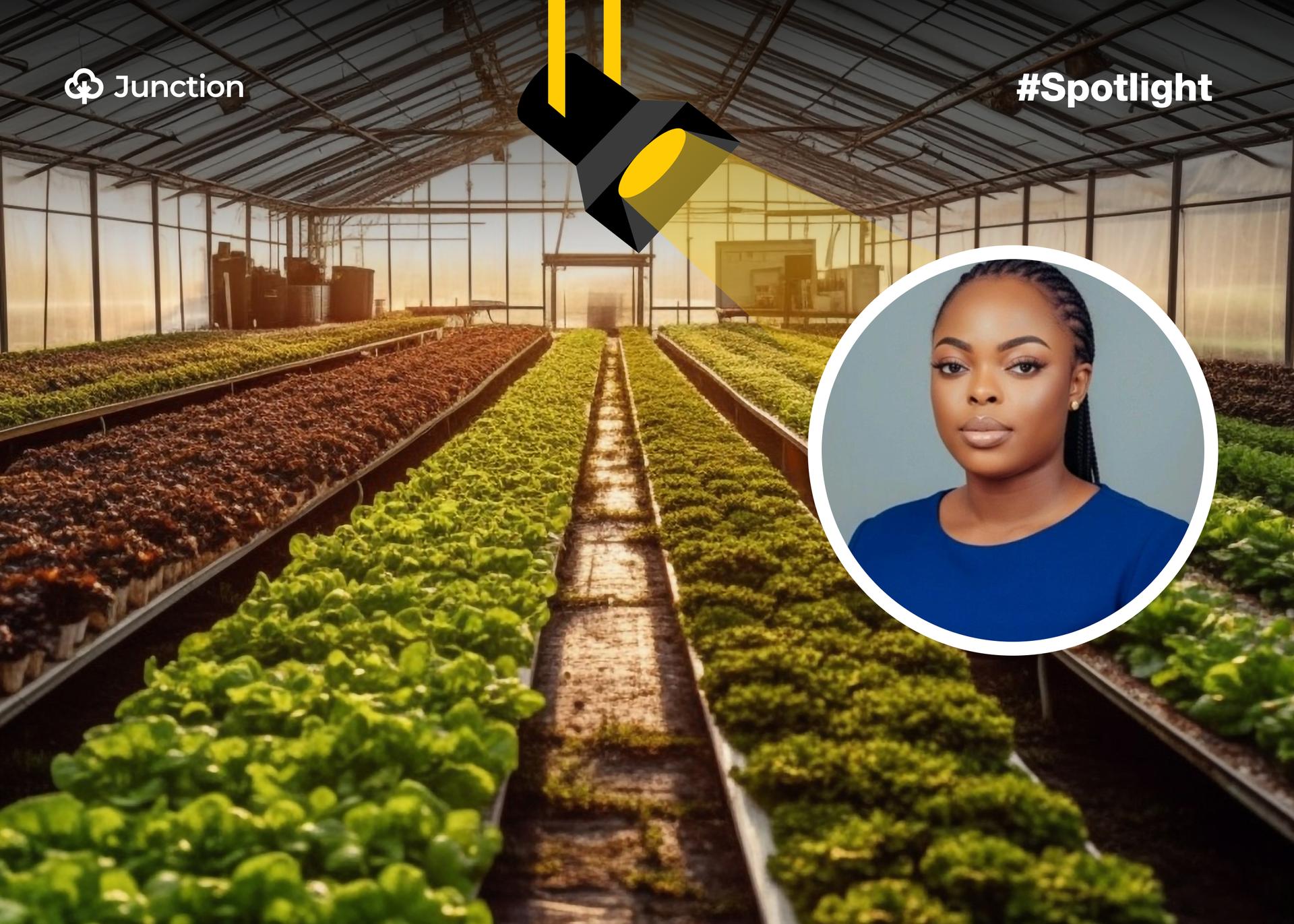
Tractors sat silent, rusted and idle. They occupied a noticeable corner at the University of Agriculture, Makurdi campus, looking like monuments to what agricultural education could have been. Machines meant to demonstrate modern mechanised farming now add to the number of non-functional tractors in the country.
Like many other engineering students in Nigeria, Josephine Ukume and her classmates were learning the mechanics of farm machinery through technical drawings and theory, unable to touch a running engine or feel the weight of a steering wheel beneath their hands.
It wasn't until her student industrial experience at CAAS Mando that Josephine first sat in the driver's seat of a working tractor. The coordinator's question still echoes: "Can you people drive tractors? Because you're calling yourselves agri-engineers." Among over fifty students, two couldn't move the machine. Both were women from her department. They had been taught the theory of tractor operation but had never turned a key in an ignition.
"It dawned on me that, ah, we have a long way to go," she recalls.
That gap between what agriculture needs and what agricultural education provides would become the defining tension of Josephine's career. Today, as an Agricultural and Environmental Engineer specialising in pressure irrigation systems and greenhouse farming in Nigeria, she builds the infrastructure that bridges theory and soil, the systems that actually feed people.
When Agriculture Choose You
Josephine didn't choose agriculture. Agriculture chose her.
"I've never liked agriculture," she admits, laughing at the irony. "Well, that was on a light note."
Born into farming in Benue State, she had lived in agriculture all her life. Although when it came time to apply to university, she wanted to study medicine. She had to pivot into engineering when the University of Agriculture, Makurdi, offered her Agricultural and Environmental Engineering instead.
Her strategy was initially to endure the first two years, then transfer to civil engineering, but something shifted in her 200-level. During a soil mechanics course borrowed from civil engineering, they went to the lab, then to the field. Josephine discovered she could outperform her classmates in soil testing and field work.
"I said, maybe there is something I could learn in this field, that's going to really put me out there," she remembers. "So that was the point I made up my mind. I was not going to switch to any course."
By her 400 level, when students had to specialise, she chose soil and water engineering. That's when irrigation, the discipline that would define her professional life, entered the picture. It was a practical match between her rural upbringing and her engineering mind, offering her a path to solving a crucial problem in rural agriculture in the country.
The Detours That Built Systems
After graduation, Josephine did what many Nigerian agricultural engineering graduates do: she left the field and started importing goods from China. She sold housewares, clothing, and shoes and built a consultancy focused on international trade.
These early years educated her in systems of another kind, supply chains, customer relationships, quality control, and business fundamentals. When people began asking her for advice, she realised she could function in the business space, not just the technical one.
Then, she pivoted back to agriculture when she started advertising food products. She was surprised by the response and the turnover, which exceeded her expectations. However, there was a problem: products from local farmers had short shelf lives. Customers complained as plantains ripened and rotted overnight, and vegetables wilted before reaching the table.
Josephine began investigating.
"So I discovered they were using a lot of harmful chemicals and, you know, they wanted fast returns," she explains. "They wanted, you know, quantity yields, but they cared less about the quality."
This is where the engineer returned. She started sourcing better seed varieties from research stations in Ibadan and began growing her own food organically to avoid post-harvest losses entirely. She also applied what she remembered about processing and packaging in her venture.
This was when Josifuds Delight NG was born, a business producing and distributing premium, organically grown Nigerian food items. Not as a lifestyle brand, but as a solution to a supply chain problem she had identified through a bitter customer experience.
Irrigation as Infrastructure, Not Accessory
Josephine thinks of irrigation as a necessary infrastructure and not a nice-to-have facility on farms. Her work with Karmel Greens, an agro-consulting firm she co-leads, centres on greenhouse construction and irrigation system design across Nigeria, focusing on pressure irrigation, specifically drip irrigation systems.
Drip irrigation is elegant in its logic. Instead of flooding a field or spraying water into the air where much of it evaporates, drip systems deliver water directly to plant roots through a network of tubes, pipes, and emitters. Water moves under low pressure, and every drop is directed to reach its target. Fertiliser can be injected into the lines to feed plants precisely where they need nutrients.
For Nigerian farmers, especially in semi-arid regions where dry seasons can stretch for months, and water scarcity threatens food production, drip irrigation is a needed climate-smart agriculture practice.
"People think irrigation is just about watering plants," Josephine says. "But it's about designing a system that works when you're not there. It's infrastructure."
The difference shows in greenhouse farming in Nigeria, where controlled environments require reliable water delivery. Josephine designs irrigation systems for both wet and dry seasons, accounting for temperature fluctuations, humidity changes, and crop water requirements that shift throughout the growing cycle.
In a greenhouse during the dry season, plants lose moisture rapidly. The irrigation system must compensate without overwatering, which invites disease. During the wet season, the greenhouse protects crops from excess rainfall, but the irrigation system must still deliver precise amounts based on actual plant needs, not assumptions.
This is systems thinking: anticipating failure points, designing for variability, building redundancy where it matters.
The Mistakes Farmers Make (And Why Agric-Engineers Matter)
Josephine has seen many noticeable issues. From farmers who buy irrigation equipment without understanding their soil type to greenhouses built without proper ventilation and drip lines installed at the wrong spacing for the crop being grown.
"Some farmers are really difficult to talk to because they love to stick to what they know and what works for them," she observes. "Like, they really don't care about the end product of what they market."
The gap is partly knowledge, partly mindset. A subsistence farmer operating on thin margins will choose the familiar over the experimental, even if the experimental solution could double their yield. They'll use flood irrigation because their fathers used flood irrigation, even if drip systems would cut their water use by 60 per cent and increase their harvest.
This is where agricultural engineering becomes serious advocacy.
When Josephine's team manages a farm project, like the one they handled recently in Minna, they ensure to explain and not just install irrigation systems.
They explain the importance of using the right materials, like the correct pipe fittings, instead of improvising, especially when materials are not available nearby. Using the wrong materials would require maintenance they couldn't afford later, defeating the purpose of cutting corners.
In this particular project, they had to send someone elsewhere to source the correct fittings. The project took longer and cost more, but the system worked as designed and would last longer.
Building What Feeds People
When young graduates slide into Josephine’s LinkedIn DMs asking for career advice, she tells them the truth and doesn't romanticise agriculture.
"If you're the kind that wants to work in an air-conditioned office, this career path is not for you," she says. "But if you do not mind, you know, going into the field, getting your hands, your legs dirty, then you're going to do well."
Her advice is to pick a specialisation while still in school and become excellent at it. Farm machinery. Irrigation engineering. Soil science. Processing systems. The agricultural value chain is vast, but employers and clients need specialists, not generalists.
"Agriculture is beautiful, but if you're looking for a white-collar job, this discipline is not for you." she said.
She also stressed that the agricultural sector in Nigeria doesn't need more people who studied agriculture but people who can solve agricultural problems. It needs engineers who understand that a greenhouse is a climate control system, that irrigation is fluid dynamics applied to crops, and that food security begins with designing systems that work when humans aren't watching.
Josephine learned this during that first IT experience when she couldn't drive a tractor. The classroom had taught her the theory of mechanical advantage and engine operation. The field taught her that knowing how a machine works and making it work are different skills entirely.
"Sometimes the theoretical aspect of the classroom is not it," she reflects. "Because when you go to the field, they are telling you, you put your key, you would do like, nobody can teach you how to drive a car by just telling you it's like this, like this until you have moved the car before you know you have done something."
What Infrastructure Actually Means
There's a reason Josephine frames her work in terms of systems and infrastructure. Food security in Nigeria isn't primarily a problem of land or labour or even capital, but a problem of missing infrastructure.
The irrigation systems that don't exist, greenhouses that aren't built and cold storage chains that are very scanty. The processing facilities that can't scale and extension services that don't reach farmers, coupled with the research that stays in universities instead of moving to fields, all contribute to the low productivity of Nigeria’s agriculture sector.
Every farmer using harmful chemicals to force quick yields is responding to a market that penalises quality and rewards speed. Every crop that spoils before reaching consumers represents infrastructure failure, not moral failure.
When Josephine designs a drip irrigation system, she's building part of that infrastructure. When she trains farmers on greenhouse management, she's transferring the knowledge that should have been in the system already. When she grows organic food through Josifuds Delight NG, she's proving that better supply chains are possible.
This is youth participation in agricultural engineering, not as a slogan, but as construction. The next generation of agricultural engineers won't save Nigerian agriculture through passion or hard work alone. They'll save it by building the systems that passion and hard work currently compensate for.
Five Years From Now
Josephine sees a large agro-hub. Not just vegetable farms, but diversified crop production. Not just a business, but a training ground where agricultural engineering graduates can practice what they learned in theory. A place where tractors run, where irrigation systems operate, where the gap between classroom and field finally closes.
She sees a large warehouse, larger than the small ones she operates now, producing food that meets international quality standards. Food that puts Nigerian agriculture on the global map, not through natural advantage but through engineered excellence.
"I see myself having a lot of graduates who are coming to learn, who are coming to perfect their skills, who are coming to practicalize what they have learned in schools," she says.

Chinwendu Ohabughiro
Chinwendu Gift Ohabughiro is a Lagos-based content writer and communications specialist passionate about people-centered stories that inspire change. A lifelong learner, she loves exploring languages, culture, storytelling—and anything involving chocolate.
Comments
More Articles Like This


