Latest news, analysis and data in the agriculture sector.
spotlight
Beyond Prayer: Strategic Solutions to Nigeria’s Agricultural Challenges
By Noah Aderoju | Nov 06, 2025 | 0 comments

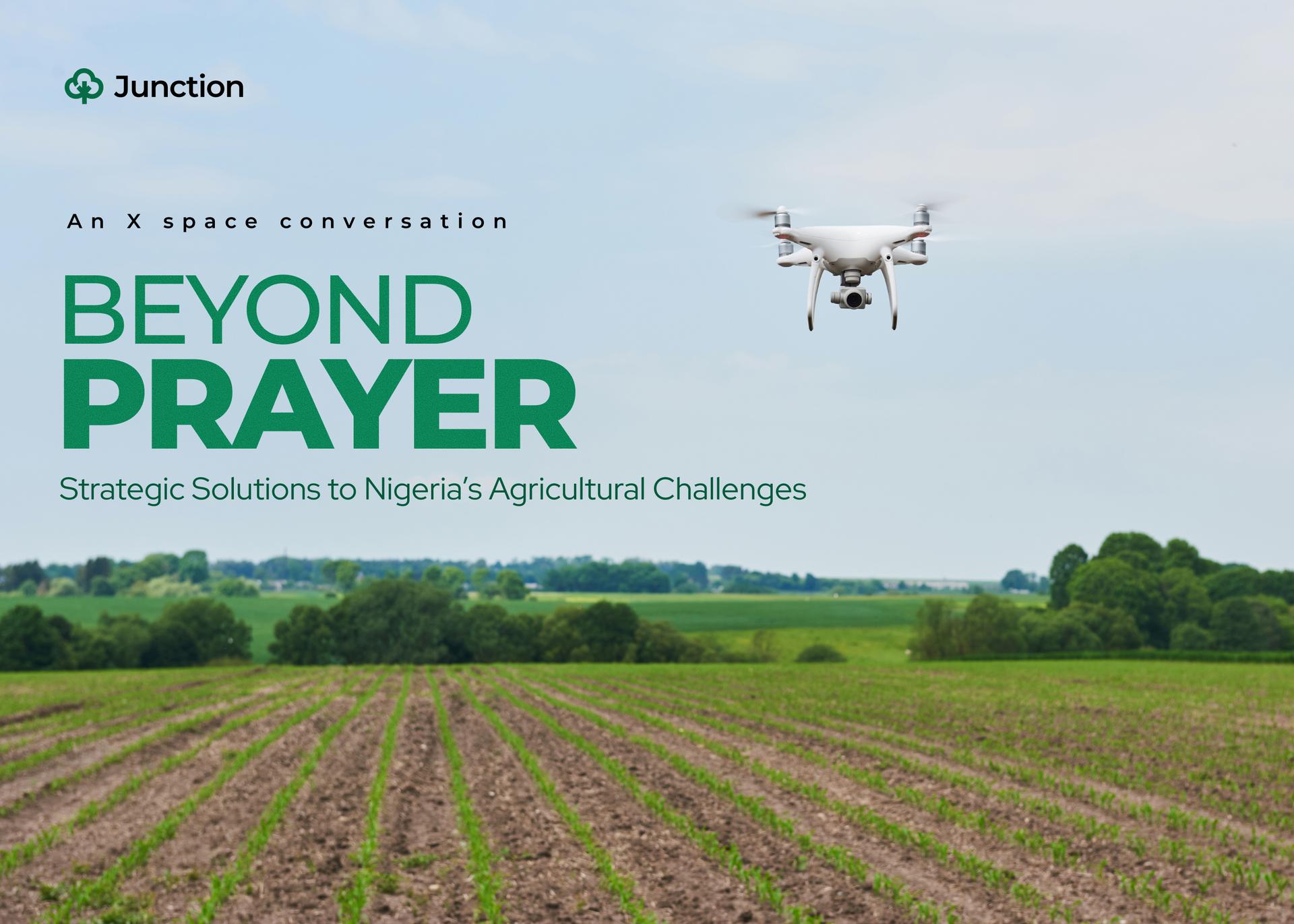
Experts conclude that intentional policy and deliberate action, not divine intervention through prayer, will solve Nigeria’s food crisis. This resolution was made during an X space conversation organised by The Agriculture Option (TAO), a youth-focused agribusiness solution provider.
The agriculture industry leaders** called for deliberate investment in policymaking and implementation, youth inclusion, and technological innovation to transform Nigeria’s food system.
Intentionality, Not Rhetoric, will solve Nigeria’s food crisis.
Agribusiness coach and co-founder of Corporate Farmers International, Akin Alabi, said Nigeria’s biggest gap is a lack of intentional action.
“There’s a lot of talk, but we need intentionality from the government, private sector, and farmers,” he said.
He explained that intentionality in action would require all stakeholders to understand the current state of the food production sector and note the gaps in it for proactive actions.
Alabi noted that while the sector saw modest improvement between 2024 and 2025, major challenges such as funding and insecurity persist.
“We need accessible funds — short-term grants and one-digit interest loans to help innovators and farmers broaden the scope of production,” he added.
While noting the impact of national and regional interventions like SAPZ by the AFDB, he also commended states like Lagos for creating programmes such as the Lagos Agrithon and the Lagos Agripreneurship Institute, which train and support young agripreneurs.
“Government and private partners must be intentional about building capacity and providing platforms. Youth can’t be attracted to agriculture if there’s no value addition,” Alabi warned.
Bridging the Gap Between Smallholders and Big Agribusiness
For Ayomide Adefuwa, the CEO of Malum Agro Services, the real progress lies in collaboration.
“There is no ‘I’ in success, only ‘we’,” he said.
Adefua called for policies that include youth, smallholders, and large-scale operators. He argued that most policies are drafted in offices 'by people who don’t understand the cost of production from a farmer’s angle.' This mismatch results in a situation where policies don’t offer solutions to the problems or realities that farmers on the ground face.
Expanding on his call for policies that fit farmers' reality, he talked about the land use policy that is hindering the progress of farmers and causing conflict between them and some other entities.
Adefuwa identified infrastructure deficit and logistics barrier as the foundation for price instability.
“If rural roads are terrible, how do you move a hundred tons of cassava? Bad roads increase logistics costs, and that drives up food prices,” he explained.
He also called for processing zones in crop-producing regions to reduce post-harvest losses.
“Production is the beginning of farming; the value chain is where the profit is,” he stressed.
Adefuwa added that Nigeria must prioritise processing and knowledge transfer to achieve self-sufficiency.
“You can’t fund what you don’t know,” he said. “We need to strengthen research institutes and universities to develop our own seed technologies so we’re not at the mercy of imports.”
Technology and Data as the New Fertiliser
Aquaculture expert and CEO of FM Farms, Folaranmi Malik, said innovation must meet farmers at their level.
“Real innovation is when technology meets farmers where they are,” he said.
Malik emphasised digitalisation, mobile extension services, and market apps that provide real-time price updates.
"Most rural farmers don't have access to experts, but almost everyone has a phone. So, we can create a mobile advisory platform, a voice or even WhatsApp updates to help farmers," he explained.
Malik added that this can help bridge the gap to a lot of services that farmers need, even in rural areas.
“Farmers in Gombe should know the market price in Lagos, that transparency helps planning and reduces exploitation,” he said.
He pointed to the TAO mobile app as a good example of how digital solutions can help farmers solve real problems. Highlighting the features of the TAO, which include Farm Tinder, an e-commerce-like solution for farmers to buy and sell farm produce and inputs; BOAT, a microfinance solution tailored specifically for farmers' needs; Telagri, the farm management solution, and other features that make farming seamless and an easy option for people to sustain on.
Recognising the importance of solutions like this to the drive of the government to involve more young Nigerians in agriculture, Malik said agriculture will only appeal to young people when it is easy, smart, and rewarding.
A Call to Action
All three experts agreed that food security will only be achieved through deliberate action, not divine intervention alone. “Beyond prayer, what Nigeria really needs is action,” Malik concluded. “If we begin now, in five years we’ll see a Nigeria where farming is fashionable, where young people proudly say, ‘I am a farmer.’”

Noah Aderoju
Noah Aderoju is a multimedia journalist and researcher with a passion for telling stories.
Nigeria food security solutionsNigeria AgricultureFood SecurityYouth In AgricultureAgribusinessAgriculture Policy
Comments
More Articles Like This


