Latest news, analysis and data in the agriculture sector.
news
Cheap Cattle at Ibadan Market Raise Questions Over Food Safety in Nigeria
By Obinna Onwuasoanya | Oct 05, 2026 | 0 comments


News in Brief:
— Cheap, weak-looking cattle at Ibadan’s Akinyele Market have sparked fresh concerns over meat safety.
— The situation highlights the need for stronger veterinary inspections and livestock-market oversight in Nigeria.
A viral post about unusually cheap cattle at Akinyele Market in Ibadan, Oyo State, has triggered concerns over the condition of livestock entering Nigeria’s food chain and the safety of meat sold to consumers.
A user identified as Kemi, who runs a foodstuff business and helps customers purchase goods, posted on X that she visited Akinyele early in the morning to price a cow for a client.
According to her, traders told her that cattle lying on the floor were cheaper than those standing because the animals were weak and unable to stand for long.
Akinyele is a major livestock and fresh-produce trading hub along Oyo Road, where cattle, goats and rams are sold alongside large quantities of vegetables and other perishable food.
The post generated warnings from social media users, with several advising her against buying such cattle, citing concerns about illness and fitness for consumption.
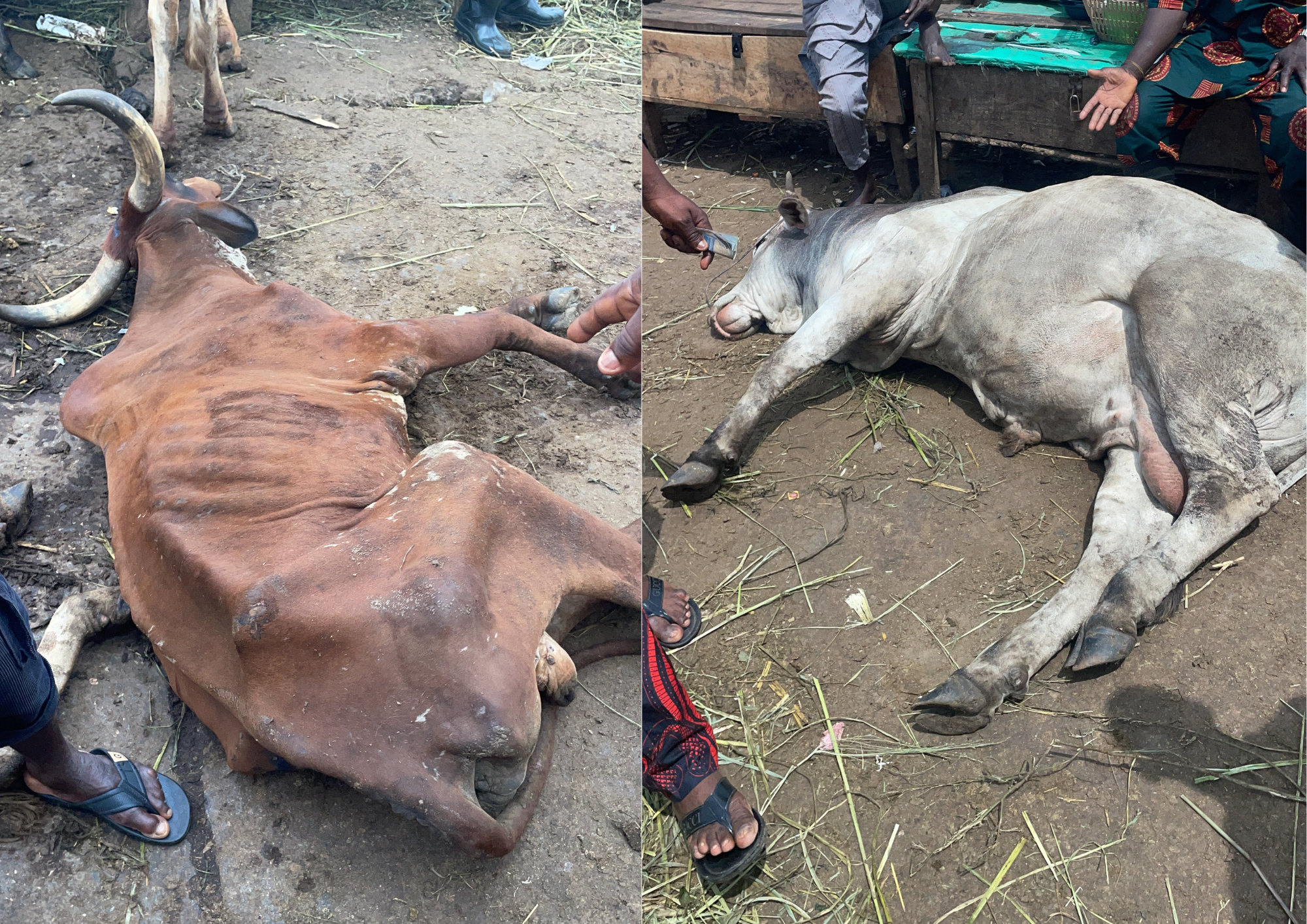
Another farmer who visited the market reportedly encountered a bloated-looking cow with a large abdomen and a thin body. Although traders reportedly described the animal as overfed, the visitor suspected ascites, a condition involving abnormal fluid accumulation in the abdominal cavity.
Meat Safety Raises Public Health Questions
The concerns come amid broader food-safety debates in Nigeria, including recent public reactions to a viral video alleging that fish was being artificially coloured. Such incidents have renewed questions about how food is handled between farms, markets, processors and consumers.
The National Agency for Food and Drug Administration and Control (NAFDAC) has also clarified that raw agricultural produce is outside much of its direct regulatory control, highlighting the need for effective oversight at other points of the food chain.
For consumers, the Akinyele discussion raises a basic question: what happens to animals that are sick, injured or unable to stand?
The Federal Ministry of Livestock Development could play a stronger role in strengthening animal-health surveillance, veterinary inspection and meat-safety systems at major livestock markets.
Nigeria has already taken steps to improve livestock disease control, including plans for animal quarantine infrastructure at strategic borders.
Similar attention at major domestic livestock markets could help identify unhealthy animals before they enter slaughter channels.
Rather than leaving consumers to judge livestock health themselves, stronger veterinary checks, market-level inspection, traceability and enforcement could help ensure that animals entering the food chain are fit for slaughter.

Obinna Onwuasoanya
Obinna Onwuasoanya is a Lagos-based tech reporter, editor, and SEO specialist with over seven years of professional writing experience. A versatile storyteller, he also works as a ghostwriter and fiction author, with his works featured in leading online and print publications. In 2018, he was shortlisted for the prestigious Writivism Short Story Prize.
Comments
More Articles Like This


