Latest news, analysis and data in the agriculture sector.
news
FG Unveils New Mechanisation Policy, to Produce 4,000 Tractor Units Yearly
By Noah Aderoju | Aug 17, 2026 | 0 comments

News in Brief:
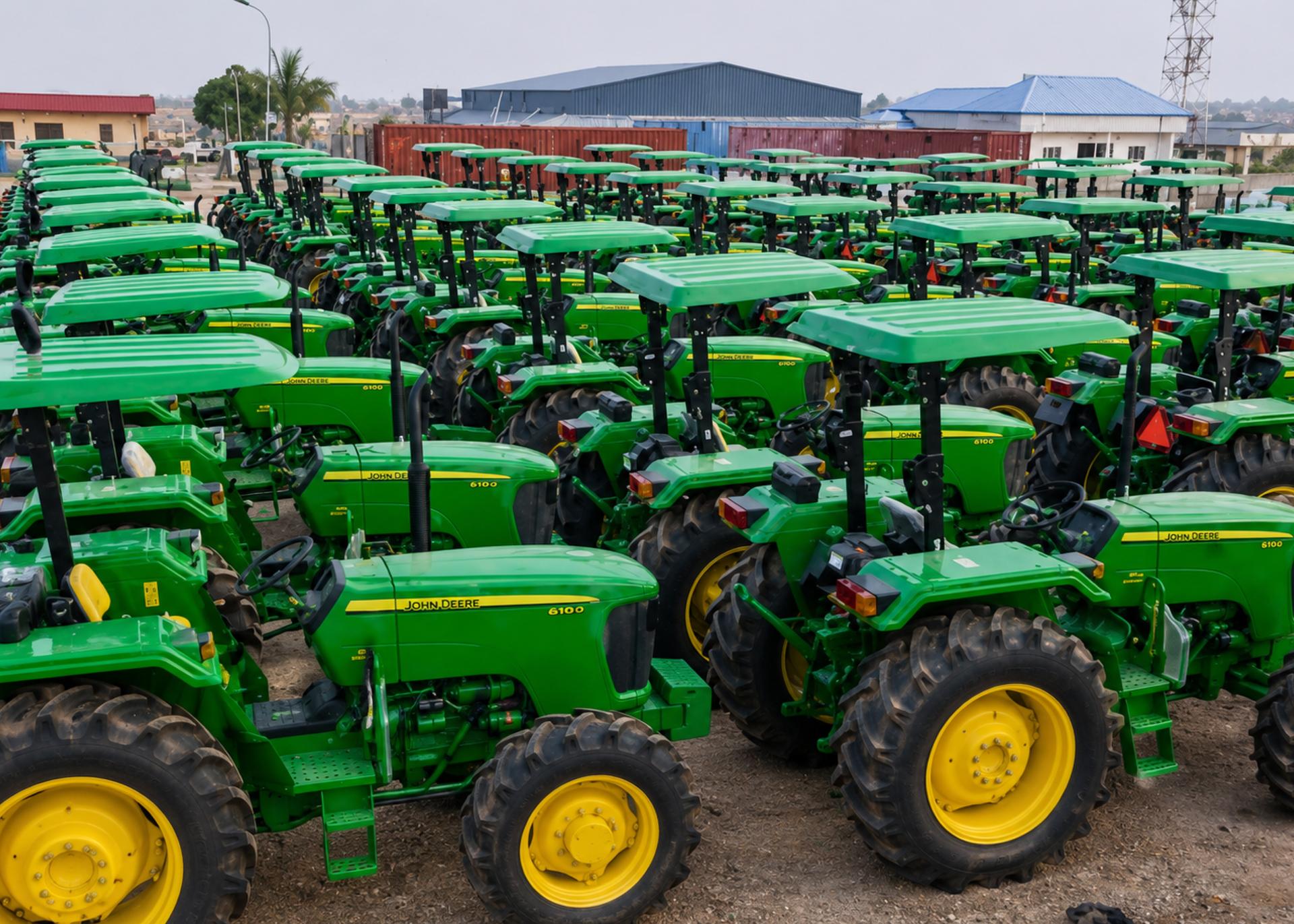
— The FG has unveiled an agricultural mechanisation policy that includes plans for a tractor assembly plant capable of producing up to 4,000 units annually.
— Minister Kyari claimed that the policy would shift Nigeria's strategy from government tractor handouts to a commercially sustainable, private-sector-led mechanisation ecosystem.
The Federal Government of Nigeria has unveiled a National Agricultural Mechanisation Policy and a National Agricultural Mechanisation Investment Strategy.
This new plan will develop a commercially viable mechanisation ecosystem for the country's agriculture sector. It includes the construction of a mega tractor assembly plant capable of producing between 2,000 and 4,000 units annually.
Minister of Agriculture and Food Security, Senator Abubakar Kyari, announced the plans at a high-level national policy dialogue on agricultural mechanisation in Abuja, held in partnership with TracTrac Mechanisation Services Limited (MSL).
Sustainability: Moving Beyond Tractor Handouts
Speaking at the event, Kyari stated that the country must move beyond simply procuring tractors. He stressed that the government will shift from fragmented public interventions to a sustainable, private-sector-enabled mechanisation service model.
The policy and investment strategy would provide the framework for mobilising capital, technology, skills and entrepreneurship. It will also ensure that machinery reaches farmers when and where needed.
The government's Renewed Hope National Agricultural Mechanisation Programme (RH-NAMP) has already commenced the procurement and deployment of 2,000 tractors. Additionally, it is distributing more than 9,000 assorted implements and spare parts.
According to the minister, this is already the largest single agricultural mechanisation programme undertaken in Africa.
However, he cautioned that the number of tractors should not be the only criterion to judge the initiative.
"The real test is whether those machines become productive economic assets, maintained, financed, utilised, monitored and accessible to our farmers," Kyari said.
He added that modern mechanisation must span the entire agricultural value chain. It should cover land preparation, planting, irrigation and crop protection as well as harvesting, processing, storage, logistics, and transportation.
Local Assembly Plant to Cut Import Dependence
The planned assembly plant is designed to reduce Nigeria's reliance on imported machinery, build domestic industrial capacity, create jobs and establish a sustainable mechanisation economy, Kyari said. He urged investors to see the sector as more than a market for supplying tractors, saying government was seeking long-term partners to build a full agricultural technology and services ecosystem.
He noted that Nigeria's large agricultural economy, growing agro-processing activities, young population and unmet demand for machinery services present a significant investment opportunity. He added that young Nigerians, women and persons with disabilities would also be integrated into the sector as operators, technicians, engineers, entrepreneurs and service providers.
Kyari cited Borno State as an example of state-level commitment, noting that Governor Babagana Zulum had distributed 200 truckloads of fertiliser to farmers and unlocked more than a dozen solar-powered irrigation systems. He also highlighted TracTrac MSL for training young Nigerians as mechanisation service providers and deploying small-scale tractors to smallholder farmers.
The minister stressed that government cannot mechanise agriculture alone, assigning roles across federal and state governments, private investors, financial institutions, development partners, research institutions and farmers.
"The federal government provides policy, standards, coordination and investment architecture; the States are to support with land access, infrastructure and implementation. The private sector is to invest, innovate and deliver services," he said, adding that financial institutions would need to design leasing and risk-sharing instruments to support the sector.
Lack of Skilled Operators Leaves Tractors Underutilised
Permanent Secretary, Federal Ministry of Agriculture and Food Security, Dr Marcus Ogunbiyi, who spoke earlier at the event, said Nigeria must confront its mechanisation deficit to convert its agricultural potential into higher production and food security. He stated that farmers had long endured inadequate machinery, high production drudgery, and insufficient investment across the value chain, but warned that tractors alone could not transform Nigerian agriculture.
"A tractor without an operator is an idle asset. A machine without maintenance is a depreciating investment. Equipment without finance cannot reach the farmer," Ogunbiyi stated.
He explained that while the policy sets the national direction, the investment strategy provides the pathway for mobilising and deploying the capital needed to implement it. It will cover machinery assembly, leasing, maintenance, spare-parts manufacturing, digital fleet management, operator training, irrigation and post-harvest technology.
TracTrac: 500,000 Farmers Reached
Chief Executive of TracTrac MSL, Godson Ohuruogu, claimed that the company has reached more than 500,000 farmers since it began operations six years ago. It has helped catalyse over ₦2 billion in investment. Through its ISSAM project with the Mastercard Foundation, TracTrac has trained more than 6,000 young people, women and persons with disabilities. It created over 3,000 jobs in a single year, established 567 youth- and women-led cooperatives, and deployed hundreds of tractors alongside nearly 2,000 labour-saving devices.
Ohuruogu urged stakeholders to judge the new policy by what farmers experience in their fields, particularly the availability of timely, affordable mechanisation services, and described the policy's ratification as the beginning, rather than the end, of the reform process.

Noah Aderoju
Noah Aderoju is a multimedia journalist and researcher with a passion for telling stories.
Mechanisation PolicyTractor PlantAgricultural mechanisationNational Agricultural Mechanisation Investment Strategy
Comments
More Articles Like This


