Latest news, analysis and data in the agriculture sector.
spotlight
From Queens to Badagry: How 'Plant Mom' Monai is Reimagining Agriculture
By Chinwendu Ohabughiro | Jan 12, 2026 | 1 comment


Far from Queens, New York, where she was raised, and notably different from what she studied, only a very potent clairvoyant will be able to predict life on a farm in Badagry, Nigeria, for Monai Nailah.
Just like in the Alchemist, the universe has a way of bringing every life eventually to its purpose.
Despite a budding career in retail design far in the Global North, when Monai Nailah McCullough first stepped onto the grounds of RBA Farms Limited in Badagry, Nigeria, she knew she had found her life purpose.
The five Dutch-style greenhouses, the sprawling coastal property, the potential for something entirely new, it all crystallised a dream she'd been nurturing since 2016.
Today, the self-proclaimed "Plant Mom" manages a unique agricultural venture that defies easy categorisation. RBA Farms isn't just a production facility; it's a resort, a culinary laboratory, and an experiment in reimagining what sustainable agriculture can look like in Nigeria.
A Journey Rooted in Passion and Led by the Universe
Monai’s path to Nigerian agriculture winds through seemingly disparate worlds, far apart but not beyond the reach of destiny.
Growing up in Queens, New York, she studied fashion business and visual merchandising, eventually building a career in retail design. But plants, she insists, were always part of her story. Her grandmother, an avid gardener who grew peppers, collards, and squash in her home garden and community gardens, provided an early foundation, though Monai didn't recognise the influence at the time.
"The influence, I always think, has always been in me," she explains. "It was not obvious."
Unlike Santiago’s dream, Monai’s turning point came during a lunch break in New York when she spontaneously bought her first houseplant. That single decision snowballed into Plant Mom, a business she launched in Amsterdam in 2018. With Plant Mom as the platform, she offered hands-on workshops teaching urban dwellers how to care for indoor plants, helping people find their way back to nature and self-care.
Now a full-fledged Green Designer and Ecological Researcher, Monai said her work helped her to discover something profound. "Caring for plants is the best way to learn how to care for yourself," she says. Perhaps a precursor to finding yourself and your purpose.
The trajectory from teaching New Yorkers and Amsterdammers how to care for succulents to managing a commercial farm in Nigeria wasn't linear; it was serendipitous. In 2024, during one of her extended stays in Lagos, Monai attended a dinner where the conversation turned to palm wine and the local beverage industry. She learned about a brewing company making ogogoro, a palmwine-based spirit, and her curiosity was piqued.
The very next day, she encountered the owner of that brewing company at an event. After an enthusiastic conversation, the woman extended an unexpected invitation: would Monai like to visit their facility in Badagry? A not very subtle way of the universe orchestrating a way to bring Monai to where she belonged.
Monai had no idea what awaited her. When she arrived, she discovered something far beyond a simple brewery tour. Close to the property was RBA Farms. She met the owner, who had grown weary after years of managing the operation and was ready to step away from active farm management.
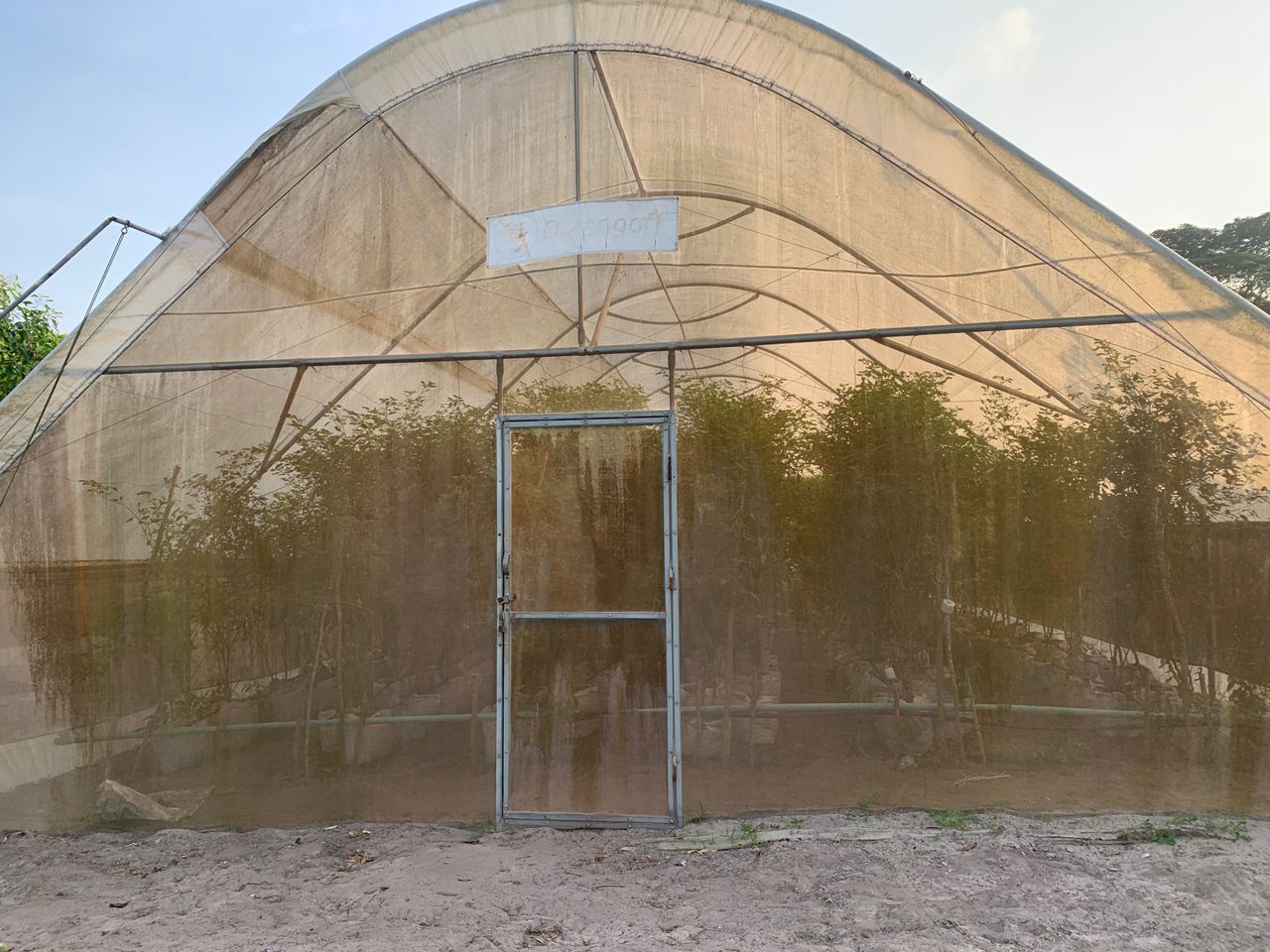
Walking through those greenhouses, farm structures she recognised from her time in the Netherlands, where she'd visited agricultural facilities across the country, Monai felt an overwhelming pull.
“This is my dream," she recalls saying that day in 2024, "all of this.”
She did not hesitate to ask if she could take over the farm's management. The owner, perhaps recognising the passion radiating from this American stranger who spoke knowledgeably about greenhouse systems and sustainable practices, agreed. This almost recreated Santiago’s encounter with the crystalware merchant in Tangier.
Over the following months, Monai created a comprehensive business plan, drawing on her years of community building through Plant Mom, her understanding of sustainable practices, and her vision for what farm-to-table could become. By July 2024, she had officially moved to Badagry, living on the farm property and assuming full management responsibilities.
It was an audacious leap, from urban plant workshops to managing multiple greenhouses, livestock, and commercial agricultural operations. But for McCullough, it felt like coming home to a calling she'd been preparing for all along.
Centring the Chef, Not the Farm
Like Santiago at the glassware shop, Monai wasn't going to settle for the status quo; she ensured to distinguish RBA Farm from the common farms. Keying into apparent need and employing innovative ideas, she sets her venture apart from the rest and creates a dignified class for it.
What sets RBA Farms apart is Monai’s unconventional approach to farm-to-table dining. Rather than focusing on maximising yields and profits, she's built her vision around a simple question: "What is farm-to-table like when you are not centring the farm but centring the chef?"
Her answer involves three interconnected initiatives. First, she supplies ingredients directly to chefs and restaurants, creating relationships that allow culinary professionals to request specific spices, herbs, and vegetables. Second, she's developing a resort where culinary artists can immerse themselves in the farm environment, harvesting ingredients in the morning and serving them to guests in the afternoon. The entire experience, from watching crops being picked to eating meals prepared with them, becomes part of the story.
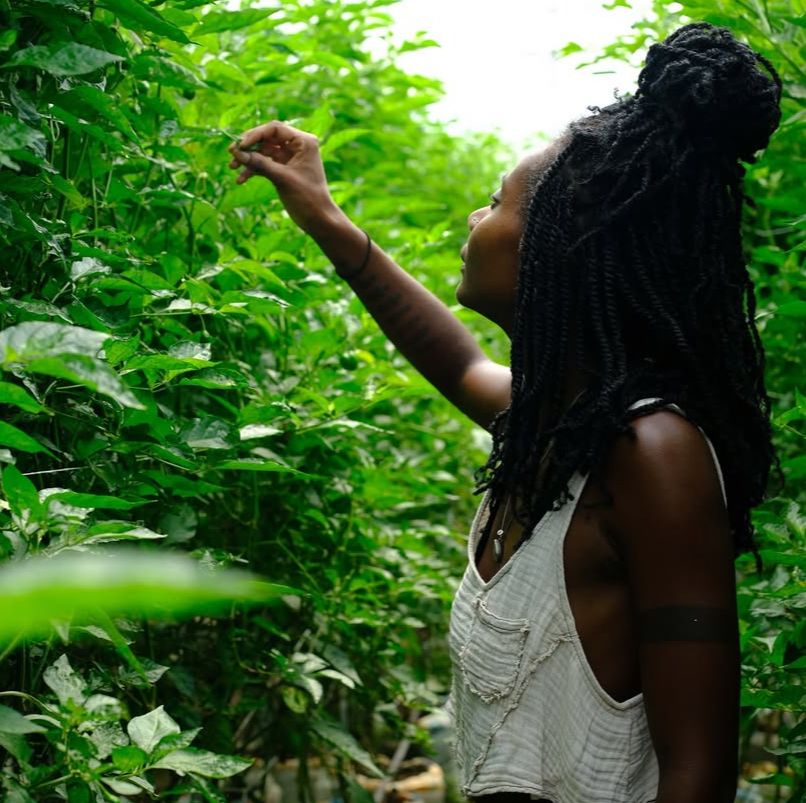
"Everything can be an experience," Monai emphasises, including building tables with local artists using indigenous materials, all while overlooking the farm's greenhouses and coastal landscape.
The third component addresses a fundamental challenge in Nigerian agriculture: the pressure on farmers to produce specific crops on demand regardless of season. Monai is exploring community-supported agriculture models that encourage consumers to embrace seasonal eating. Fresh produce from Badagry can reach Lagos in just two hours, a stark contrast to the 52 per cent spoilage rates that plague food transported from northern Nigeria due to logistics failures.
"Nobody in Nigeria should be starving," she notes bluntly. "We have enough food, but most of our food goes to waste because the truck breaks down."
Building Soil in Sand
Running a farm in Badagry presents unique technical challenges. The sandy coastal soil lacks the nutrients most crops need, making investment in soil development paramount. Monai has implemented comprehensive composting systems, using chicken manure mixed with local grasses to create nitrogen-rich amendments. She maintains four specialised greenhouses, each dedicated to different growing strategies.
Greenhouse One serves as the "chef's paradise," where she cultivates spices and culinary herbs. Greenhouse Two houses a long-term project: more than a dozen fruit trees, including cocoa, guava, agbalumo (African cherry), and citrus varieties that will take two to three years to produce. A colleague manages greenhouse three's habanero pepper cultivation, while greenhouse four focuses on seedlings.
The farm uses gravity-fed irrigation systems that eliminate the need for generators, employing both drip tape and sprinklers to maintain moisture levels. Palm fronds create natural shade structures within the greenhouses, helping regulate temperature in the tropical climate.
The Challenge of Skilled Labour
Perhaps Monai’s greatest frustration lies in finding workers who share her ambition. "I'm in the village," she acknowledges. "They don't dream big." While she can hire hands from nearby communities, training people who have both the passion and vision to grow with the enterprise has proven difficult.
"You want people to want it," she explains. "They have to have passion for it, to make an impact."
She hopes to find some relief through partnerships with agricultural organisations working with university students. When approached about hosting passionate agricultural students for hands-on learning experiences, Monai responded enthusiastically: "Absolutely, 100 per cent. Because I can also learn too."
As a foreigner, Monai recognises the privilege her background affords her in Nigeria. Rather than leveraging that advantage solely for personal gain, she's committed to empowering Nigerian talent. "That's an opportunity for me to empower the Nigerians," she says. "And I have to stand 10 toes down."
Learning to Be Present
Monai’s most profound lesson since arriving in Nigeria centres on presence. "You really have to be in it for things to work," she reflects. "In Nigeria, you have to be there. You have to show up."
This doesn't mean adopting Nigerian ways of thinking wholesale, "I can't think like a Nigerian. I'll go mad," she jokes, but rather learning how Nigerians think while maintaining her own perspective and vision.
The isolation of village life rarely weighs on her, though she makes an important distinction: "I'm alone, I'm not lonely." She walks through the village daily, supporting local markets and building trust within the community. The economic impact of her presence matters deeply to her, as does the sense of safety that comes from being known.
A Vision Taking Root
RBA Farms hosts open farm days on Sundays, inviting visitors to learn about sustainable agriculture while swimming in the resort's pool and enjoying farm-fresh lunches. At ₦30,000 per person (currently), the events barely break even once boat transportation from Lagos is factored in, but McCullough views them as essential marketing and community building.
Looking ahead, she envisions rotating chef residencies that showcase not just Badagry's agricultural potential but its cultural heritage. The historic town's connections to the transatlantic slave trade and its links to Barbados, documented by local researcher Ashamu Sewanu Fadipe, provide rich material for culinary storytelling.
When asked what advice she'd give to other diaspora Africans considering agricultural ventures in Nigeria, Monai’s response is characteristically direct: "Are you mad? Stay home. You can do it in the US."
However, she tempers this with nuance. Success in Nigeria, she believes, comes not from courage alone but from seizing opportunities aligned with one's unique path. Her journey through Amsterdam, her relationship with a Nigerian partner, her expertise in visual design and community building, all these elements converged to make RBA Farms possible.
"You can do this anywhere," she concludes. "You just have to be very committed and open to opportunities. Say yes more."
As Monai continues building soil, training workers, and cultivating relationships with chefs across Lagos, she's proving that agricultural innovation in Nigeria doesn't have to follow conventional paths. By centring human connection, between chefs and ingredients, consumers and seasons, diaspora expertise and local knowledge, she's creating something far more valuable than a typical farm operation.
She's nurturing a new way of thinking about food, community, and what it means to truly be present in the work of growing things.

Chinwendu Ohabughiro
Chinwendu Gift Ohabughiro is a Lagos-based content writer and communications specialist passionate about people-centered stories that inspire change. A lifelong learner, she loves exploring languages, culture, storytelling—and anything involving chocolate.
Comments
More Articles Like This


