Latest news, analysis and data in the agriculture sector.
spotlight
How A Broadcaster Became Farmers' Advocate, Why It Matters
By Chinwendu Ohabughiro | Aug 17, 2026 | 0 comments

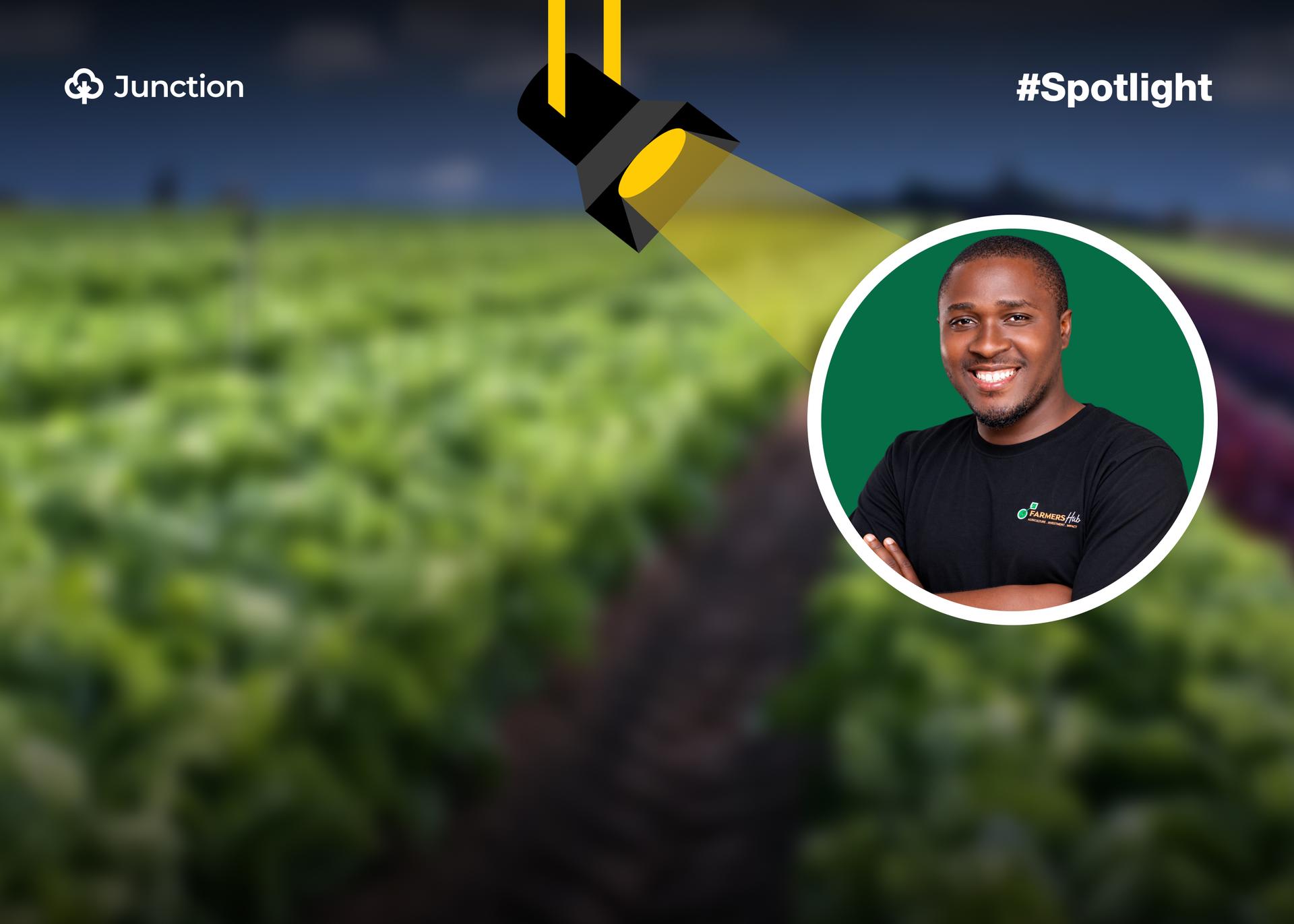
Across several farms in Nigeria, there are needs to be met, gaps to be filled, and many muted groans of farmers wishing someone could hear their voice and do something.
Nigeria has hundreds of policies, interventions, roadmaps and strategies to maximise the country’s agricultural potential and achieve food security and self-sufficiency.
However, most of these policies and strategy documents are formed and concluded in high-level meetings attended mostly by technocrats and development experts. Often, these participants lack adequate knowledge about what is going on in farms across the country. The farmers, whose on-the-ground activities will translate these lofty ideas and goals into reality, are often absent and their interests underrepresented.
The consequence is that Nigerian farmers’ realities are left out in national policy and actions. And if policies and strategies are impracticable for smallholder farmers who make up over 70% of Nigerian food producers, then it will be difficult to achieve real impact.
At the national level, an estimated 34.7 million Nigerians were projected to face acute food insecurity by mid-2026, due to insecurity, climate shocks and rising input costs affecting food production.
How are farmers experiencing these challenges to food production? Knowing the answer to this question is the first point in preparing a national solution.
The problem of unheard voices, missing insights and mismatched solutions is what Afeez Olumide Garuba has spent the past couple of years trying to address.
A broadcaster by training and a catfish, snail and vegetable farmer by practice, he built Voice of the Farmers, a Lagos-based advocacy and media platform to help farmers be heard.
When Farmers Have No Voice
Farm extension workers can serve as the formal link between farmers and policymakers. Whereas, with an approximate ratio of one extension worker for every 10,000 farmers, Nigeria's formal system for relaying information between farmers and the state is stretched far beyond possibility. The Food and Agriculture Organisation's (FAO) recommendation is one extension worker for roughly 400-800 farmers.
The media would be an alternative for their voices to be heard, but, according to Olumide, there is the same silence in the media landscape.
"We have media for banking, we have media for real estate, we have media for medicine," he says. "But you hardly see people speaking for farmers."
Other sectors had built infrastructure to represent themselves publicly. Agriculture, Nigeria's largest employer, largely had not.
Olumide believes that while working to produce food for more than 200 million Nigerians, farmers often don't have time to tell their stories, but that doesn't mean they shouldn't be heard.
"They need people to take that up for them,” he said. And that's what led him to create a vehicle to amplify farmers' voices.
A Broadcaster Who Found His Calling
Olumide has a background in telecommunications and later broadcasting, after radio internships pulled him completely into the media industry. In Badagry, working with a local outlet called RITA, he was made manager of an online radio operation and later head of operations. He created Agbeloba, a Yoruba-language program built entirely around farmers: their challenges, their successes, how they grew and what they grew.
"That was where my journey into agriculture started," he reveals.
He later moved into television as a social media manager, but the pull toward agricultural storytelling did not stop. In 2022, he left conventional media employment and returned to Badagry to build something of his own.
The name came almost by accident. A guest he once hosted on air told him that he could be the industry's voice, and the phrase stuck. Voice of the Farmers was born. Not long after, people who had watched him advocate for farmers began to ask an obvious question: was he a farmer himself? He wasn't at the time, so he sought opportunities to enter the sector.
He started with catfish production, then snail farming, before growing vegetables. His endeavour allowed him to answer the question and to understand, from experience, what he was asking farmers to talk about.
Building a Movement that speaks for farmers
Voice of the Farmers began with a mid-range Android phone, one wired lapel microphone, and an interview with a rabbit farmer that is still circulating online today. Olumide funded it himself, largely from his television salary, with no sponsor involved. An early collaboration with a friend fell apart over mismatched expectations about compensation versus shared vision, a setback, not an ending.
The platform now runs with a core team of about seven, alongside training partnerships with RITA, the Mastercard Foundation, and the NGO API International. A parallel consultancy in snail farming helps fund the advocacy between events
Voice of the Farmers positions itself as more than a media outlet. Olumide describes its purpose as bridging two directions of silence: farmers who cannot get government attention, and government programs farmers never hear about.
"So many things that the government is doing for farmers, nobody is listening," he says. "So many things that the farmers need the government to do for them, the government has not even heard."
When Advocacy Produced Results
An example of the importance of Olumide’s work came from a visit to Dadi Louis, a riverine settlement in Badagry in 2023. Representatives of the farming community, separated from its nearest local government by a stretch of water, told him that no local government chairman had visited in over two decades, despite the community being, by their account, Lagos State's largest potato producer.
Residents had already written letters and lobbied for support for several years, but with little result. When Olumide came, he added a formal letter and a short documentary built from interviews with residents about what they needed and why. The video reached the state's agriculture commission, and within a month or two, the community received fertiliser support worth roughly ₦2 million, along with food grain and cash assistance. The kind of support that had eluded them for many years.
"That means I have a value that I can add to society," he affirmed.
This case study implies that visibility and properly documented, directed advocacy can move institutions in ways that petitions alone could not. And that was one of his concrete reasons for continuing what he does.
Beyond Production: Agriculture Needs Better Storytelling
Olumide is candid about the perception problem still plaguing the sector.
"Many people still see farming as a dirty man's job, a poor man's job," he said.
At best, a retirement plan rather than a career choice. Changing this narrative, he argued, requires showing that agriculture is bigger than the farm gate. His training programmes push young people toward logistics, market-access platforms, agri-tech and consultancy roles rather than production alone.
There are results already among the people he has mentored, including one who built a digital platform to connect farmers and buyers.
That perception problem has a measurable cost. Despite contributing close to a quarter of Nigeria's gross domestic product (GDP), agriculture receives less than 4% of total commercial bank credit. Telling better stories about the sector, in Olumide's view, is not ornamental; it is part of changing who imagines a future in it.
Looking Ahead
Olumide's ambitions extend beyond Lagos and the southwest, the region he currently mostly covers. He wants to reach across the south, into the north, and toward the east, and, further out, a radio station built entirely around agriculture. He knows he is not the first to attempt this kind of project, but he wants to be among the most consequential.
Conversations about Nigeria's food security usually centre on fertiliser, seed varieties, mechanisation and finance. While inputs matter, access to finance and technology is, in Olumide's own words, among farmers' most urgent needs.
His work points to something easier to overlook: a farmer whose problem is never documented, never reaches a commissioner's desk, never gets attached to a face and a name, tends to stay a farmer whose problem goes unsolved.
Dadi Louis, mentioned above, did not need more potatoes. It needed to be seen.
That, perhaps, is where advocacy begins.

Chinwendu Ohabughiro
Chinwendu Gift Ohabughiro is a Lagos-based content writer and communications specialist passionate about people-centered stories that inspire change. A lifelong learner, she loves exploring languages, culture, storytelling—and anything involving chocolate.
Comments
More Articles Like This


