Latest news, analysis and data in the agriculture sector.
spotlight
How Chidiogo Joy’s journey into modern farming is inspiring Nigerian youth
By Noah Aderoju | Sep 10, 2025 | 0 comments


Farming has long carried a stigma in Nigeria, with many parents discouraging their children from pursuing it in favour of white-collar careers like medicine, law, or engineering.
Chidiogo Joy, a young woman from Anambra State, grew up with such pressures despite her early interest in agriculture. Her passion was rekindled when she discovered modern farming and urban agriculture, which eventually earned her the title “Veggie Queen.”
In just two years, Chidiogo has built a thriving career, redefining what it means to be a farmer in Nigeria. Her journey, once met with family scepticism and marked by personal sacrifices, now stands as a story of resilience, innovation, and belief in agriculture’s power to transform lives and strengthen the nation’s food security.
The Seed of a New Path
Chidiogo first discovered soilless farming through an online video during the latter half of her National Youth Service Corps (NYSC) year. The discovery reignited her passion for agriculture and led her to enrol in a three-month hands-on training under the Enterprise for Youths in Agriculture (EYiA) programme, implemented by Soiless Farm Labs in partnership with the Mastercard Foundation.
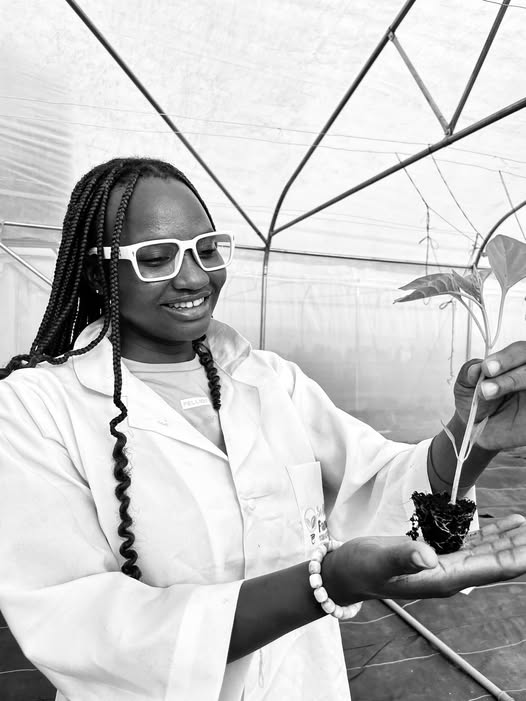
Despite her family’s concerns about security and welfare while travelling from Anambra to Ogun State for the training, she remained determined. Knowing someone who had successfully started a farm after the programme eased her parents’ worries and strengthened her resolve.
She described the three-month experience in Abeokuta as ‘overwhelming,’ recalling a sense of instant connection. “I realised this is where I’m supposed to be,” she said.
Today, Chidiogo is a full-time farmer in Ogun State, managing the farm enterprise her group established during the programme. Though she had hoped to return to the East to start her own farm and inspire other youths, the lack of start-up capital and a desire to avoid the pressure to pursue a conventional career if she went back home convinced her to stay and grow where she was.
Farming with Innovation and beyond traditional limits
Equipped with modern agricultural and agribusiness skills, Chidiogo now manages AgriVantage Farms Ltd, a company she and her team registered before graduating from the training programme. She currently operates four greenhouses of about 192 square meters each, practising both soilless and soil-based farming.
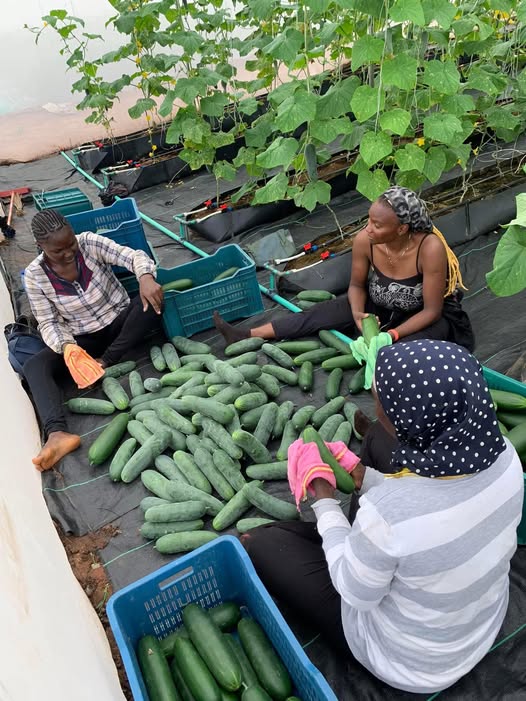
Her crops include bell pepper, habanero pepper, tomato, and cucumber. Unlike traditional farmers, her cultivation is not tied to seasons. Instead, she grows in cycles lasting six to nine months, with harvesting starting as early as the second or third month, depending on the crop.
“With modern farming, we understand the nutrient requirements of a plant from transplanting to the end of its cycle, and we provide exactly what it needs in the right quantity,” she explained, noting that this approach enables farmers to maintain steady harvests and income year-round. “There’s also an increase in yield compared to planting directly in soil and waiting for nature to take its course.”
Still, the journey has had challenges. Tomato cultivation, in particular, proved difficult, forcing her to pause after some failed cycles.
Life lessons from farming Tomatoes
Bacterial infections, pest infestations, and a struggle with mental health defined Chidiogo’s first attempt at tomato farming.
“When I grew tomatoes in my first cycle, it was the rainy season. The greenhouse we built during training had a net ceiling for affordability, but rain still seeped in, leaving the soil and leaves constantly wet. That created the perfect environment for bacteria,” she explained. The experience made her determined to try again in the dry season when things would be better.
However, a lack of experience led to more challenges. “One thing about tomatoes is that once bacteria infect a spot, you shouldn’t plant them there again,” she said. Missing out on this technical detail, she replanted in the same space. “Dry season came, and I tried again. This time it wasn’t bacteria but insects, especially whiteflies, which are notorious for damaging tomato crops and cutting yields.”
The repeated battles with bacteria, pests, and disappointing harvests took a toll on her mental health but left her with lasting lessons.
“There’s no perfect system or weather for tomatoes, just like there’s never a perfect condition for life,” Chidiogo reflected. “You must always prepare for the challenges. That’s where production planning comes in. If I’m planting in the dry season or rainy season, I now know the likely issues and prepare ahead with the right solutions.”
Despite the setbacks, she continues to learn from each cycle and plans to return to tomato farming with renewed knowledge.
Doing the business of Agriculture
Being part of the programme’s farming community has greatly benefited Chidiogo, especially with market access. She focuses on producing premium (Grade A) vegetables, which attract better prices, while the management team helps handle offtake.
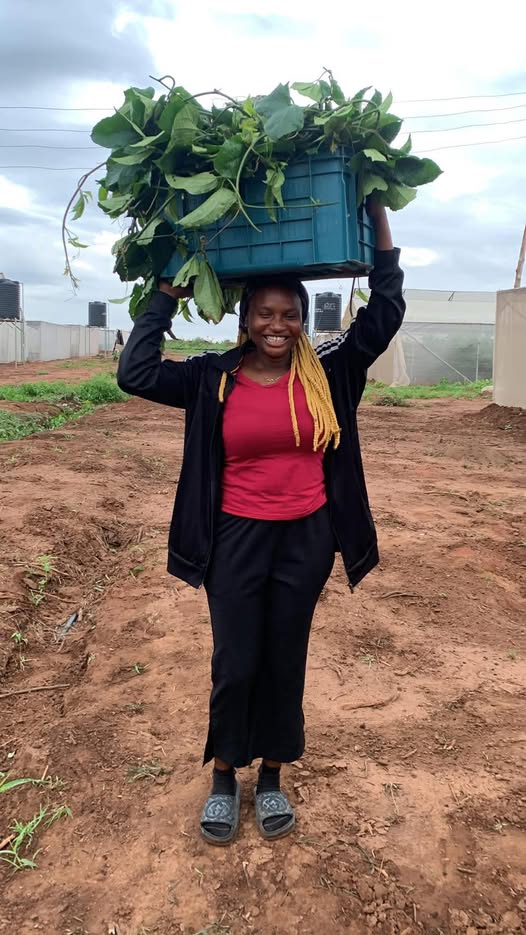
She has also learned to manage relationships with buyers to secure better deals. Occasionally, she sells directly in local markets and sometimes even in Lagos and Abeokuta.
To navigate market fluctuations, Chidiogo uses predictive planting, timing her cycles to align with peak demand. She targets December to February, when the rains have subsided, production is lower, and vegetable prices are higher.
Becoming an Agriculture Advocate on Social Media
Chidiogo is passionate about sharing her journey, including failures, to inspire young Nigerians and challenge stereotypes that farming is dirty or unprofitable. Known online as the Veggie Queen, she advocates for more youths to embrace agriculture.
Through her posts on Facebook and other platforms, she underscores the urgent need for greater agricultural participation, especially in the Southeast, where less than 1% of farmers reside, driving up vegetable prices compared to other regions.
“The reason I share my journey is to inspire people,” she said. “Many want to start farming but have doubts, asking if it’s lucrative, if they can succeed, or if they can still live the lifestyle they want. I want to change that mindset.”
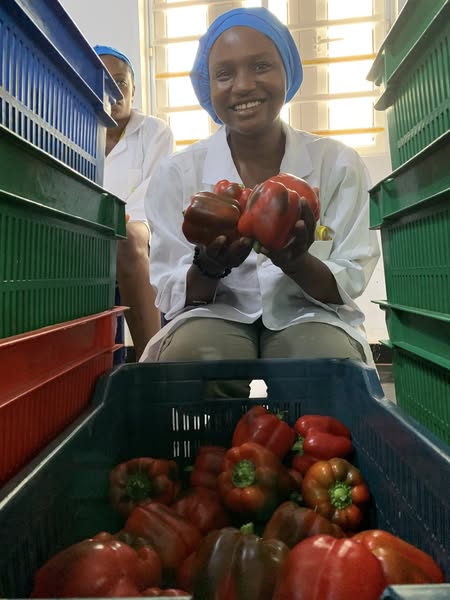
She believes agriculture is not just a career but a way of life, the future, and a powerful solution to Nigeria’s food insecurity and unemployment.
Her advice to aspiring farmers: it demands patience, dedication, and experience. It is not a get-rich-quick venture, but it is ultimately worth it.
A Future in Agri-Consultancy
Chidiogo’s journey has demanded sacrifices, including life in a remote farm setting, away from urban comforts and social activities. Yet her vision remains clear. In the next five years, she hopes to transition from fieldwork to consultancy, while also establishing a nursery and building a business that generates passive income within the agricultural sector.
Chidiogo Joy is not just growing vegetables; she is cultivating a vision for a more food-secure and agriculturally vibrant Nigeria.

Noah Aderoju
Noah Aderoju is a multimedia journalist and researcher with a passion for telling stories.
Young FarmerChidiogo JoyModern farmingUrban FarmingYouth in AgricultureEYiASoiless Farm LabsChidiogo JoyFarmer Chidiogo JoyYoung FarmerYouth in AgricultureNigerian Young FarmerModern FarmngUrban FarmingNigerian Youth
Comments
More Articles Like This


