Latest news, analysis and data in the agriculture sector.
business
How to Start a Profitable Rabbit Farming Business in Nigeria (2026 Guide)
By Obinna Onwuasoanya | Dec 22, 2025 | 0 comments


Rabbit farming is increasingly attracting interest in Nigeria as an affordable entry point into livestock production with strong profit potential. As demand for cheap animal protein continues to rise, many farmers are seeking alternatives that require less land and lower operating costs than conventional poultry, piggery, or cattle systems.
Rabbit production fits well into this space due to their rapid growth, high reproductive capacity, and efficient feed conversion. Their lean meat is also gaining popularity among health-conscious consumers, while the minimal space required for housing makes rabbit farming suitable for both urban and peri-urban environments.
In 2026, the economics of rabbit production align closely with Nigeria’s agricultural realities, particularly the rising costs of feed, limited funds for side projects, and land constraints. A rabbit farming business can be started on a modest budget using locally sourced materials and a small number of breeding stock, or scaled up into a commercial operation with structured housing, improved genetics, and organised marketing channels.
Key cost considerations include cages or hutches, quality does and bucks, feed and forage, basic healthcare, and routine management. The level of investment ultimately depends on the scale of operation, location, and management approach, but with proper planning, rabbit farming remains one of the most flexible and accessible livestock enterprises in the country.
Steps to Start a Rabbit Farm in Nigeria
1. Develop a Business Plan
Before purchasing your first rabbits, it is important to develop a business plan. It should be simple but clear, outlining how the enterprise will operate and eventually grow. This plan should define the scale of production, whether backyard, semi-commercial, or fully commercial, while clearly identifying the target market, such as households, restaurants, hotels, supermarkets, or other breeders. It should also estimate key costs, including housing, quality breeding stock, feed, healthcare, and labour, alongside realistic income expectations from meat sales, breeding stock, and manure. Having a basic business plan not only guides day-to-day decisions but also improves credibility when seeking partners, loans, or agricultural grants.
2. Choose the Right Breeds
Choosing the right rabbit breeds is critical to success, as not all perform equally well under Nigerian climatic conditions or market expectations. Popular meat breeds such as the New Zealand White and Californian are favoured for their fast growth rates, good carcass quality, and efficient feed conversion, making them suitable for both small-scale and commercial production. Chinchilla rabbits are valued for their hardiness and ability to adapt to varying environments, while Dutch rabbits are often preferred by beginners and small-scale breeders due to their manageable size and breeding efficiency. To maximise productivity and reduce losses, farmers should start with verified pure breeds sourced from reputable breeders rather than unverified roadside sellers. Farmers should purchase healthy, active rabbits aged 4–5 months, maintain a proper ratio of one buck to five to ten does, and keep accurate breeding and kindling records from the very beginning.
3. Prepare Proper Housing
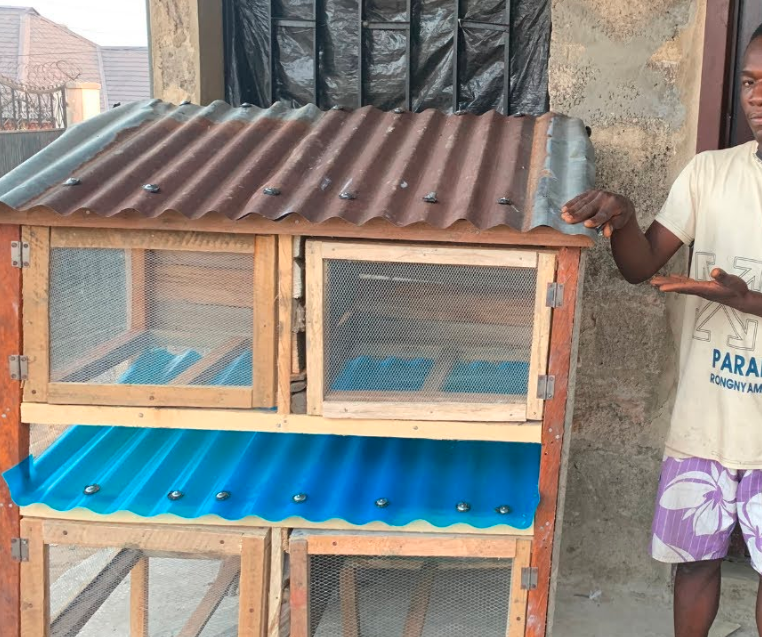
Proper housing and equipment are essential for maintaining healthy and productive rabbits, as poor housing can cause disease, stress, and losses. Rabbit housing should be well-ventilated to reduce heat stress, easy to clean to maintain hygiene, and secure enough to protect animals from predators such as rats, snakes, and dogs. Elevated cages or hutches with good airflow and adequate shade help keep rabbits comfortable, while droppings trays make waste removal easier and improve sanitation. Separate cages for bucks, does, and growing rabbits allow better breeding control and reduce fighting. To manage costs, housing can be constructed using wood, wire mesh, and other locally available materials without compromising basic welfare standards.
4. Feeding and Nutrition
Feeding and nutrition management play a major role in the success and profitability of rabbit farming, as feed accounts for a significant portion of production costs. Rabbits can be fed a combination of commercial pellets for balanced nutrition, fresh forages such as elephant grass, guinea grass, and sweet potato vines, as well as supplementary feeds including vegetable waste, legumes, and hay. Clean, fresh water must be available at all times to support digestion and growth. To prevent health problems and losses, farmers should avoid toxic plants, mouldy feeds, and sudden changes in diet.
5. Health Care and Disease Prevention
Health care and disease prevention are critical in rabbit farming, as rabbits are generally hardy but highly sensitive to poor hygiene and stress. Maintaining clean cages, feeders, and water containers helps reduce the risk of infections, while quarantining new stock before introducing them to the main herd prevents the spread of disease. Farmers should regularly observe their rabbits for early signs of illness, such as loss of appetite, diarrhoea, or unusual inactivity and seek professional advice from a veterinarian or extension officer when necessary. Effective preventive management is far more cost-efficient than treating disease outbreaks after they occur.
6. Breeding and Production Management
Breeding and production management are central to achieving consistent output and profitability in rabbit farming, as rabbits can reproduce every 30–35 days under proper care. Farmers should avoid overbreeding to prevent exhaustion and poor litter performance, while providing clean nesting boxes ahead of kindling to reduce kit mortality. Kits are typically weaned at four to six weeks to allow the doe to recover and prepare for the next cycle, and unproductive or poor-performing animals should be culled early to conserve feed and space. Well-managed breeding cycles help maintain healthy stock and improve overall farm profitability.
7. Marketing and Sales Strategy
A clear marketing and sales strategy is essential for building a profitable rabbit farming business, as consistent buyers determine steady cash flow. Rabbit farmers can target local households, restaurants and hotels, supermarkets and meat processors, as well as other farmers seeking breeding stock. Promoting products through social media, direct engagement with eateries, and word-of-mouth referrals helps expand market reach and build loyalty. Maintaining good hygiene, proper handling, and presentable packaging further improves buyer confidence and strengthens repeat sales.
Conclusion
Estimating costs, expected returns, and long-term growth potential is essential before investing in rabbit farming. A well-managed small-scale rabbit enterprise can break even within four to six months, depending on feed efficiency, survival rates, and access to reliable buyers. Income can be generated from multiple streams, including the sale of rabbit meat, breeding stock to other farmers, and manure to crop producers for organic fertiliser. Understanding these revenue sources helps farmers plan cash flow and reinvest profits strategically.
Beyond initial profitability, rabbit farming offers strong growth potential through gradual scaling. Farmers can expand production by increasing the number of breeding does, improving housing and feeding systems, and strengthening market access through partnerships and direct sales. In conclusion, rabbit farming represents a practical livestock opportunity for Nigerians in 2026, particularly for youth, women, and urban farmers seeking manageable agribusiness options. With proper planning, quality inputs, and a clear market strategy, it can provide a steady income with relatively low financial risk.

Obinna Onwuasoanya
Obinna Onwuasoanya is a Lagos-based tech reporter, editor, and SEO specialist with over seven years of professional writing experience. A versatile storyteller, he also works as a ghostwriter and fiction author, with his works featured in leading online and print publications. In 2018, he was shortlisted for the prestigious Writivism Short Story Prize.
Comments
More Articles Like This


