Latest news, analysis and data in the agriculture sector.
business
How to Start Sweet Corn Farming in Nigeria and Find Buyers Before Harvest
By Obinna Onwuasoanya | Sep 17, 2026 | 0 comments

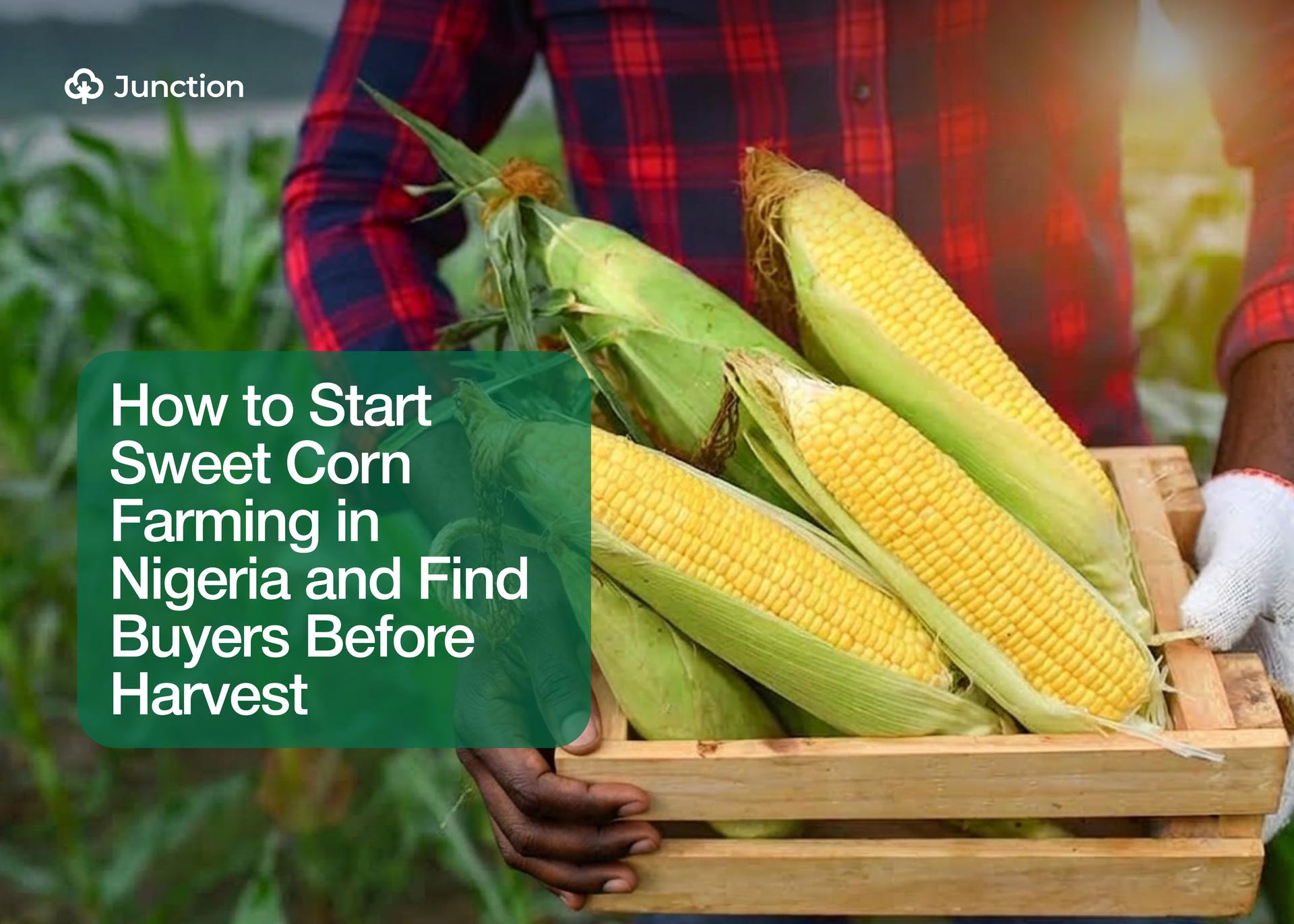
Sweet corn could be an alternative crop for young Nigerian farmers looking to diversify their stream of income from agriculture. While it remains an uncommon crop, especially among smallholder farmers who prefer to stick to what they know, the same limitations should not apply to the new generation of agripreneurs.
Unlike conventional maize, which about 80% of Nigerian farmers already grow, sweet corn is mainly consumed fresh and has limited shelf life without additional preservation. Nigerian farmers also say that finding buyers before harvest is a major challenge, as well as managing production to avoid glut.
Supermarkets, restaurants, and hotels are among the best customers for this product because they offer stable prices. However, their demand is typically fixed and small because sweet corn is mainly used to make other foods such as salad and fried rice.
Open markets can offer higher volumes, but pricing and demand can fluctuate too frequently for farmers to plan properly.
What Does It Cost to Grow Sweet Corn?
Sweet corn seeds can be expensive, with a 250g pack of hybrid seeds costing about ₦140–₦200 per gram. In comparison, hybrid maize seeds cost approximately ₦5.50–₦9 per gram, based on prices of ₦11,000–₦18,000 for a 2kg pack. This makes the initial seed investment for sweet corn considerably higher.
In addition, the crop is sensitive to pest damage, which can affect the cost of starting and operating this venture. Because appearance matters as much as its quality, farmers may need to budget more carefully for regular field scouting, pheromone traps, biological controls and timely pest-control applications.
The silking stage, in particular, can require close monitoring and well-timed interventions against corn earworm, fall armyworm and other caterpillars.
In this instance, pest management is not simply an additional expense but an important part of protecting the crop’s value, as an infestation that damages the ears can translate directly into rejected or lower-value produce.
Compared with conventional field maize, sweetcorn can therefore require more intensive management per hectare, even though the basic production activities such as land preparation, planting, fertilisation, weed control and irrigation are similar.
Field maize farmers may tolerate some cosmetic pest damage because the crop is ultimately harvested for grain.
A farmer starting a sweetcorn venture should consequently factor pest scouting, protective inputs, labour for frequent monitoring and potentially more precise spraying equipment into the initial production budget.
How Much Can Farmers Make?
Sweet corn yields in Nigeria can vary considerably depending on seed variety, planting density, water availability, soil fertility and level of farm management.
Under average or traditional practices, farmers may harvest around 1.5–2.5 tonnes per acre, while good agronomic practices and improved hybrid varieties can raise yields to approximately 3.5–5 tonnes per acre.
With intensive management, including irrigation, appropriate nutrition, higher plant populations and effective pest control, yields of 6–8 tonnes per acre may be achievable.
Fresh sweet corn prices cited in Nigeria can range from about ₦1,500 to ₦3,000 per kg (with a cob costing about ₦800), although retail prices should not be treated as the price a farmer will necessarily receive at the farm gate.
At those retail price levels, 1.5 tonnes of produce would have a theoretical value of about ₦2.25 million–₦4.5 million, while 3.5 tonnes could correspond to ₦5.25 million–₦10.5 million before production, transport, marketing, packaging and other costs.
Higher yields could further increase revenue potential, but achieving them generally requires greater investment in inputs and operations.
For a prospective farmer, the calculation is not simply how much sweetcorn an acre can produce, but how much of that harvest can be sold at a viable price after accounting for production costs and losses.
Finding Buyers in Nigeria
Finding buyers before planting is one of the most important considerations for farmers entering commercial sweet corn production in Nigeria.
Apart from its relatively short shelf life and lower demand, the crop also matures quickly compared to regular maize. It can be ready for harvest in about 65 to 70 days.
Approaching marketing in the same way as conventional maize, which can be dried and stored for longer periods, is a terrible move.
Potential buyers include supermarkets, hotels and restaurants, food processors, catering and fast-food businesses, roadside corn sellers and open-market traders.
Farmers should establish relationships with prospective buyers before planting, particularly when cultivating larger areas. Discussions should cover the expected quantity, preferred variety and cob size, quality standards, packaging, delivery schedule and proposed price or pricing arrangement. This determines how much to plant based on realistic demand rather than expected yield.
It is also important to distinguish between retail prices and the price a farmer can actually negotiate at the farm gate or through bulk sales. If the market is offering ₦800 per cob at retail, for example, the farmer should not automatically use that figure to calculate expected revenue, since transportation, handling, packaging, retailer margins and unsold produce can significantly reduce what the producer receives.
A backup marketing strategy is equally important because demand for fresh sweet corn may not be large enough to absorb a major harvest at once.
One farmer experienced this challenge after producing sweet corn without securing sufficient buyers and eventually sold part of the harvest through his farm outlet. Although this generated lower returns than a potential supermarket arrangement, it provided an alternative channel and helped prevent more produce from going to waste.
For new farmers, the lesson is that commercial sweet corn production should begin with a clear marketing plan: secure some buyers in advance, estimate their likely demand, stagger production where possible, and have alternative outlets such as markets, roadside sellers, direct-to-consumer sales and processors available before harvest arrives.
Should You Start Growing Sweet Corn in Nigeria?
Sweet corn farming offers Nigerian farmers an opportunity, but it is not a crop you simply plant and wait to harvest. The relatively high cost of seed, the need for closer pest management, and the crop’s short harvest window can increase the financial risk for farmers who enter production without adequate planning. At the same time, its potential yields and demand from supermarkets, restaurants, food businesses and direct consumers create opportunities for farmers who can consistently produce and market quality cobs.
For young agripreneurs considering the venture, the market should come before the farm. Knowing who will buy the harvest, how much they are likely to purchase, what quality they require and what price they are prepared to pay can help determine how much to plant and how much to invest. With buyers identified before planting, realistic production and cost estimates, effective pest management and a backup outlet for unsold produce, sweet corn can become more than an uncommon crop; it can be a commercially viable addition to Nigeria’s growing agricultural enterprise landscape.

Obinna Onwuasoanya
Obinna Onwuasoanya is a Lagos-based tech reporter, editor, and SEO specialist with over seven years of professional writing experience. A versatile storyteller, he also works as a ghostwriter and fiction author, with his works featured in leading online and print publications. In 2018, he was shortlisted for the prestigious Writivism Short Story Prize.
Comments
More Articles Like This


