Latest news, analysis and data in the agriculture sector.
news
Japan Commits $3.5m to Strengthen Nigeria’s Rice Seed Production
By Chinwendu Ohabughiro | Aug 24, 2026 | 0 comments

News in Brief:
— Japan has provided about ¥587 million, equivalent to $3.5 million, to strengthen Nigeria’s rice seed production system through equipment, technical assistance and institutional capacity development at the National Cereals Research Institute.
— The intervention targets a critical constraint in Nigeria’s rice value chain by improving access to high-quality breeder and foundation seeds, while also expanding mechanisation, seed processing and post-harvest capacity.
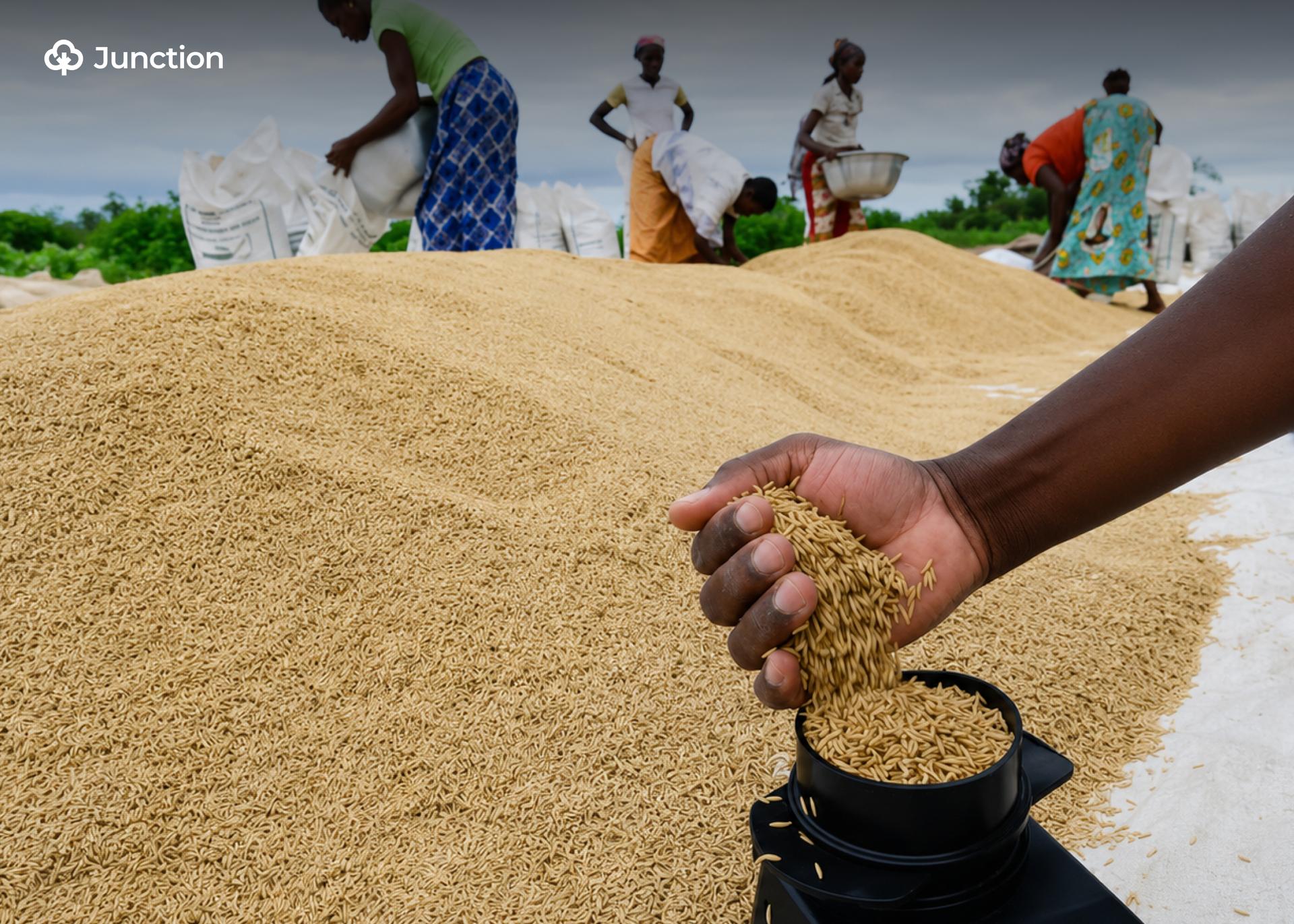
Japan has provided about ¥587 million, equivalent to $3.5 million, to strengthen Nigeria’s rice seed production system as part of efforts to improve agricultural productivity and food security.
The grant will support the National Cereals Research Institute (NCRI) in Badeggi, Niger State, with modern agricultural machinery, seed-processing equipment, laboratory facilities and technical assistance.
Hideo Suzuki, the Japanese Ambassador to Nigeria, disclosed the support at the handover ceremony for the Project for the Enhancement of Rice Seed Production System at the NCRI in the Bida Local Government Area of Niger State.
The project is expected to strengthen the institute’s ability to produce high-quality breeder and foundation seeds, which form the basis for the certified seeds supplied to farmers.
Japan Targets a Critical Link in Nigeria’s Rice Value Chain
Suzuki said the intervention was designed to improve the quality and reliability of Nigeria’s rice seed supply, with the ultimate goal of increasing yields, productivity and confidence in the national seed system.
He noted that demand for rice in Nigeria continued to outpace domestic production, making improvements across the rice value chain important to the country’s food security objectives.
“Good seed is the beginning of a good harvest,” Suzuki said.
The project supports Nigeria’s Second National Rice Development Strategy for 2020 to 2030, which aims to increase domestic rice production by improving productivity, seed systems, mechanisation and value chain development.
For rice farmers, access to reliable planting material is particularly important because improved agronomic practices and modern farming technologies cannot deliver their full potential without quality seeds.
New Equipment to Expand Seed Production
The Japanese grant will finance agricultural equipment for NCRI headquarters and its outstations in Niger and Oyo states.
The equipment will include 20 medium-sized tractors, three rice transplanters, four small combine harvesters and two excavators for seed cultivation and production.
The project also includes four constant-temperature germination testers, three automatic weather observation systems and seven small flat drying machines for post-harvest processing.
Other equipment supplied includes seed graders, paddy huskers, grain moisture meters, laboratory equipment, maintenance tools, spare parts and consumables.
The machinery is expected to improve the efficiency and scale of seed production while reducing dependence on labour-intensive processes. The intervention also covers technical assistance, equipment operation and maintenance training and institutional capacity development.
Suzuki said the combination of machinery and human capacity was necessary for the investment to deliver sustainable benefits.
He urged NCRI to ensure that the equipment was properly operated and maintained so that farmers could continue to benefit from the intervention over the long term.
Better Seeds Could Support Higher Rice Yields
The investment in seed production comes as Nigeria seeks to strengthen domestic rice production and reduce dependence on imports.
According to Keiji Ishigame, Chief Representative of the Japan International Cooperation Agency (JICA) Nigeria Office, the agency launched the Coalition for African Rice Development (CARD) in 2008 with its partners to support African countries in increasing rice production and reducing dependence on imports.
Nigeria remains a key participant in the initiative and developed its National Rice Development Strategy II for 2020 to 2030 as a framework for transforming the rice sector.
The strategy focuses on areas such as improved productivity, stronger seed systems, mechanisation and value chain development.
Ishigame declared that JICA’s support for Nigeria’s rice sector had expanded over time to cover production, post-harvest management, marketing, agricultural extension, institutional strengthening and policy development.
JICA is also implementing a capacity-development project focused on strengthening institutions and stakeholders involved in rice seed multiplication, quality control and seed management.
NCRI Receives Support for Climate-Resilient Varieties
The intervention could also strengthen Nigeria’s ability to multiply and distribute improved rice varieties.
The Executive Director of NCRI, Mohammed Ndagi-Ishaq, said the institute had developed and released high-yielding and climate-resilient crop varieties, including zinc-biofortified rice varieties.
He said the newly provided machinery and seed-processing equipment would improve the efficiency, quality and scale of the institute’s seed production activities.
This is significant for a rice sector facing the combined pressures of increasing food demand, climate variability and the need to improve productivity on existing farmland.
Reliable multiplication of improved varieties can help ensure that farmers have access to planting materials capable of supporting higher yields and addressing specific production challenges.
Government Links Seed Investment to Food Security
The Minister of State for Agriculture and Food Security, Aliyu Sabi-Abdullahi, described the Japanese intervention as timely and strategic.
He said the support would strengthen rice seed production and mechanisation while addressing gaps across the rice value chain.
The minister said agriculture remained central to Nigeria’s economic transformation and national stability, arguing that food security should be viewed not only as an agricultural issue but also as a matter of national security and economic sovereignty.
He said the project aligned with the Federal Government’s priorities around food security, reducing import dependence, creating jobs, empowering farmers and promoting inclusive economic growth.
Meanwhile, the Niger State Government reaffirmed its support for initiatives to improve rice seed production and food security.
Governor Umaru Bago, represented at the event by Mohammed Baba, Managing Director of the Niger Agricultural and Mechanisation Development Authority, said improved access to quality rice seeds could increase farmers’ productivity and strengthen food security.
He added that stronger domestic production could also reduce Nigeria’s dependence on food imports.

Chinwendu Ohabughiro
Chinwendu Gift Ohabughiro is a Lagos-based content writer and communications specialist passionate about people-centered stories that inspire change. A lifelong learner, she loves exploring languages, culture, storytelling—and anything involving chocolate.
Comments
More Articles Like This


