Latest news, analysis and data in the agriculture sector.
news
Nigerian Pangasius (Basa) Fish Farmers Cease Production as Market Challenges Mount
By Obinna Onwuasoanya | Sep 29, 2026 | 0 comments

News in Brief:
— A Nigerian Pangasius farmer has stopped production after struggling to find consistent buyers, despite the fish’s faster growth and potentially lower feed costs than catfish.
— The experience highlights the need for farmers to understand market demand, pricing and customers before investing in production.
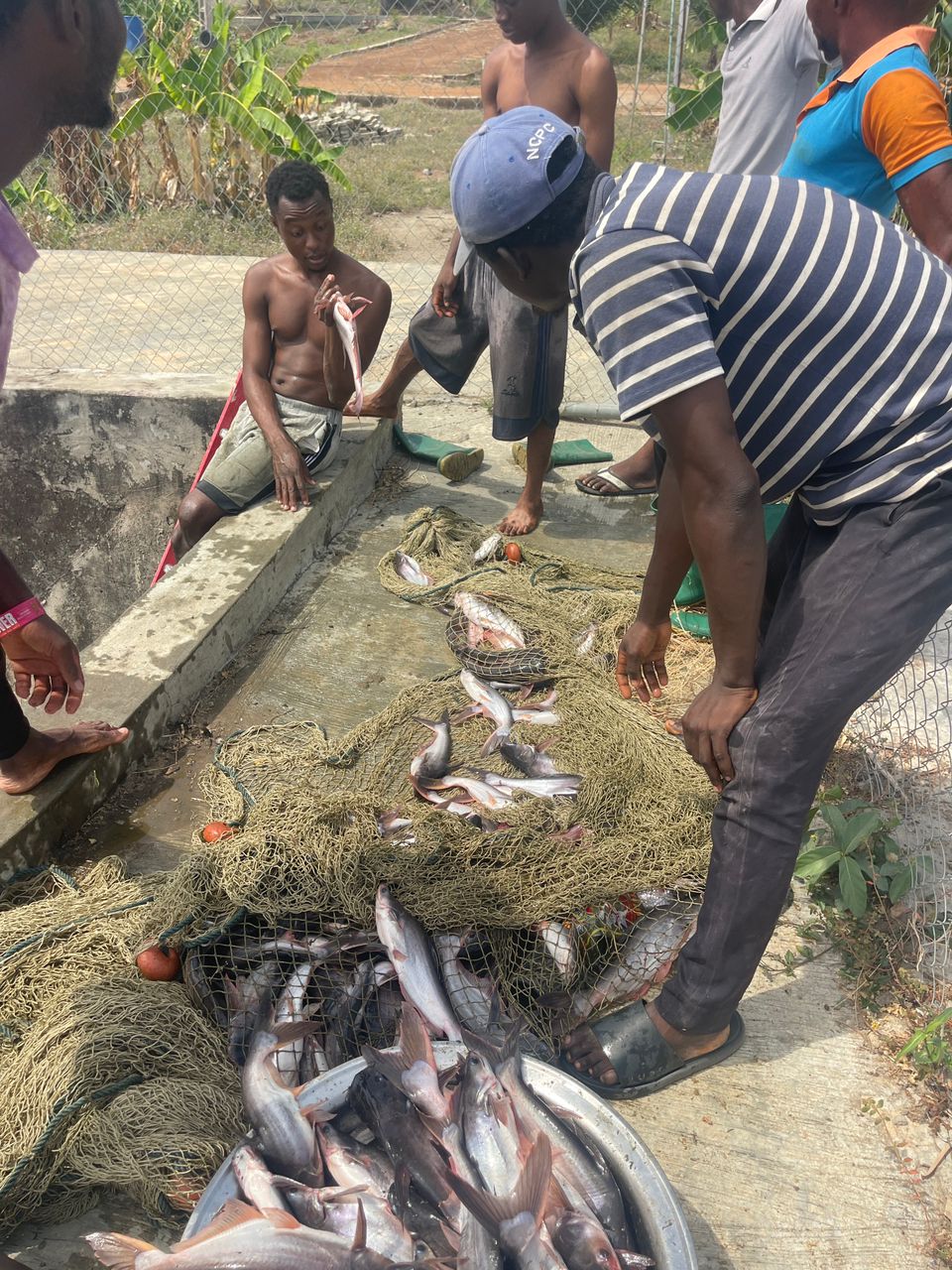
A Nigerian farmer, Oyeniran Michael, shared a video on X showing him and other workers completely draining a pond to end their Pangasius (Basa) production. He explained that they made the decision because of weak, inconsistent market demand.
According to Michael, the farm had been harvesting Pangasius for more than a year, even though they were not being fed as ‘aggressively.’ However, the farm struggled to find a strong and consistent market for its harvest.
He added that the farm would likely replace Pangasius with a fish species that has a more established market, stressing that farmers should understand their customers and what they are willing to buy before investing in production.
Pangasius Can Grow Faster Than Catfish
Michael also highlighted production advantages that could make Pangasius attractive to Nigerian fish farmers.
He said Pangasius can reach about 1–1.5kg within four to six months under semi-intensive pond conditions, while catfish can take roughly five to seven months to reach a similar size.
He also cited a feed conversion ratio (FCR) of about 1.5–1.8 for Pangasius, compared with 1.8–2.2 for catfish. A lower FCR means less feed used to produce a given quantity of fish, potentially reducing production costs when other conditions are favourable.
Pangasius, commonly known as Basa or Swai in international markets, is a freshwater species native to Southeast Asia that is increasingly being explored as an alternative to Nigeria’s traditional African catfish production.
Farmers Warned Against Producing Without Buyers
Another farmer, Fayowole, said he had experienced a similar challenge with his own Pangasius farm.
He noted that although the fish can grow quickly, weak demand can leave farmers spending months on feed, labour and farm management before struggling to sell their harvest at a profitable price.
“The lesson for farmers is simple: don’t stock first and look for buyers later,” he said.
Some vendors and consumers call Pangasius Obokun because of its similar silver-grey appearance. However, true Obokun, commonly identified as Chrysichthys nigrodigitatus, is native to Nigerian freshwater and brackish environments.
Pangasius reportedly sells for about ₦4,000–₦5,000 per kilogram in some Nigerian markets, compared with approximately ₦5,500–₦6,500 per kilogram for catfish.
For Nigerian fish farmers considering Pangasius, these farmers’ experiences point to a broader agribusiness lesson: production should follow the market, not the other way around.

Obinna Onwuasoanya
Obinna Onwuasoanya is a Lagos-based tech reporter, editor, and SEO specialist with over seven years of professional writing experience. A versatile storyteller, he also works as a ghostwriter and fiction author, with his works featured in leading online and print publications. In 2018, he was shortlisted for the prestigious Writivism Short Story Prize.
Comments
More Articles Like This


