Latest news, analysis and data in the agriculture sector.
news
Nigerian Researchers Use AI to Produce Biogas from Oil Palm Waste
By Chinwendu Ohabughiro | Sep 03, 2026 | 0 comments

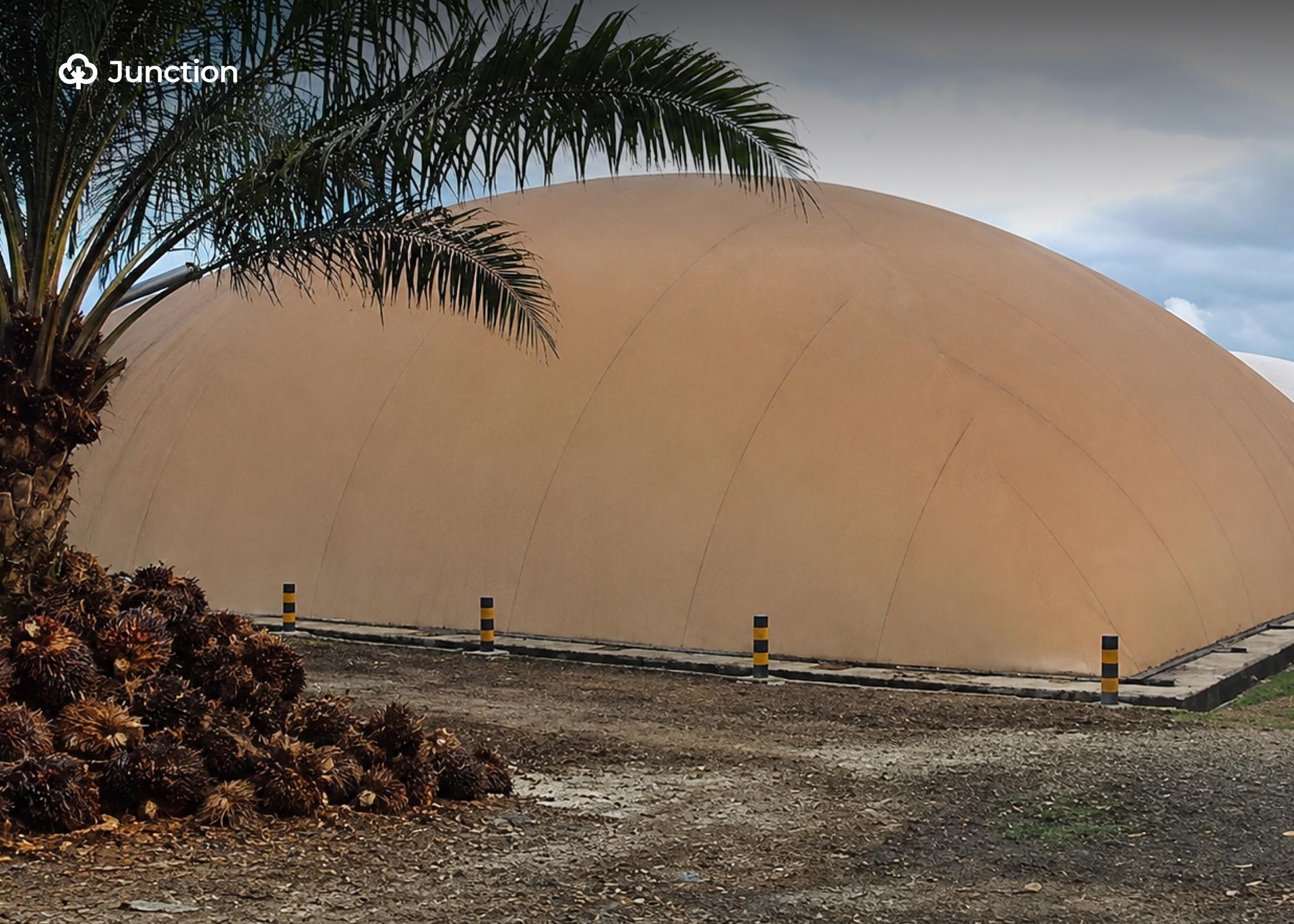
News in brief:
— Researchers combine anaerobic digestion experiments, machine learning and optimisation techniques to improve methane-rich biogas production from empty palm oil fruit bunches.
— This new approach could reduce waste disposal by turning a major agricultural residue into renewable energy and support Nigeria’s transition towards a circular bioeconomy.
A team of researchers in Nigeria have developed a way to improve renewable energy production from palm oil waste. This method, published in Biomass Conversion and Biorefinery, examines the conversion of empty palm oil fruit bunches (OPEFB) into methane-rich biogas.
OPEFB is one of the major residues generated by palm oil processing. Large quantities are usually discarded or burned, creating environmental challenges while leaving their energy potential largely untapped.
Dr Idowu Olugbenga Adewumi, the team lead from the Federal College of Agriculture, Ibadan, explored anaerobic digestion as a method to convert the lignocellulosic residue into methane.
The complex structure of OPEFB limits microbial access to cellulose and hemicellulose, making efficient conversion difficult. These researchers decided to combine laboratory experiments with machine learning, explainable artificial intelligence and evolutionary optimisation.
Temperature and Methane Production
The researchers analysed 5,452 observations from laboratory-scale experiments conducted between January and November 2025. They observed that temperature was the strongest predictor of methane production, followed by cellulose content.
The researchers explained that higher temperatures can increase microbial activity, improve substrate breakdown and support methane-producing microorganisms.
Five predictive models were assessed, including Multiple Linear Regression, Artificial Neural Network, Random Forest, Support Vector Regression and Gradient Boosting Regression. Multiple Linear Regression recorded the strongest predictive performance.
The Role of AI in Identifying Optimal Production Conditions
Researchers discovered that they could use Genetic Algorithm and Particle Swarm Optimisation to identify conditions predicted to maximise methane production. The optimum conditions included new levels of temperature, pH, organic loading rate, hydraulic retention time, and carbon-to-nitrogen.
Under these conditions, the model predicted higher methane production.
In Nigeria, where palm oil processing generates substantial quantities of biomass waste, improved conversion technologies could create an additional use for materials that might otherwise be burned or discarded.

Chinwendu Ohabughiro
Chinwendu Gift Ohabughiro is a Lagos-based content writer and communications specialist passionate about people-centered stories that inspire change. A lifelong learner, she loves exploring languages, culture, storytelling—and anything involving chocolate.
Comments
More Articles Like This


