Latest news, analysis and data in the agriculture sector.
news
Nigeria’s Farm Exports Drop to ₦786bn, Imports Hit ₦1.1trn
By Chinwendu Ohabughiro | Dec 17, 2025 | 0 comments

News in brief:
-Nigeria’s agricultural exports fell 37.39% quarter-on-quarter to ₦786.62bn in Q3 2025, while imports rose to ₦1.10trn.
-The widening gap highlights food import dependence, weak agro-processing, and pressure on foreign exchange.
Nigeria’s agricultural exports declined sharply to ₦786.62 billion in the third quarter of 2025, while imports of farm produce climbed to ₦1.10 trillion, widening the agricultural trade gap despite a positive overall merchandise trade balance.
Data from the National Bureau of Statistics (NBS) show that the total value of agricultural goods traded during the quarter stood at ₦1.90 trillion. Exports accounted for ₦786.62 billion, representing an 11.69% year-on-year decline from ₦890.72 billion in Q3 2024 and a steeper 37.39% drop from ₦1.26 trillion recorded in Q2 2025.
Cocoa Continues to Dominate Farm Exports
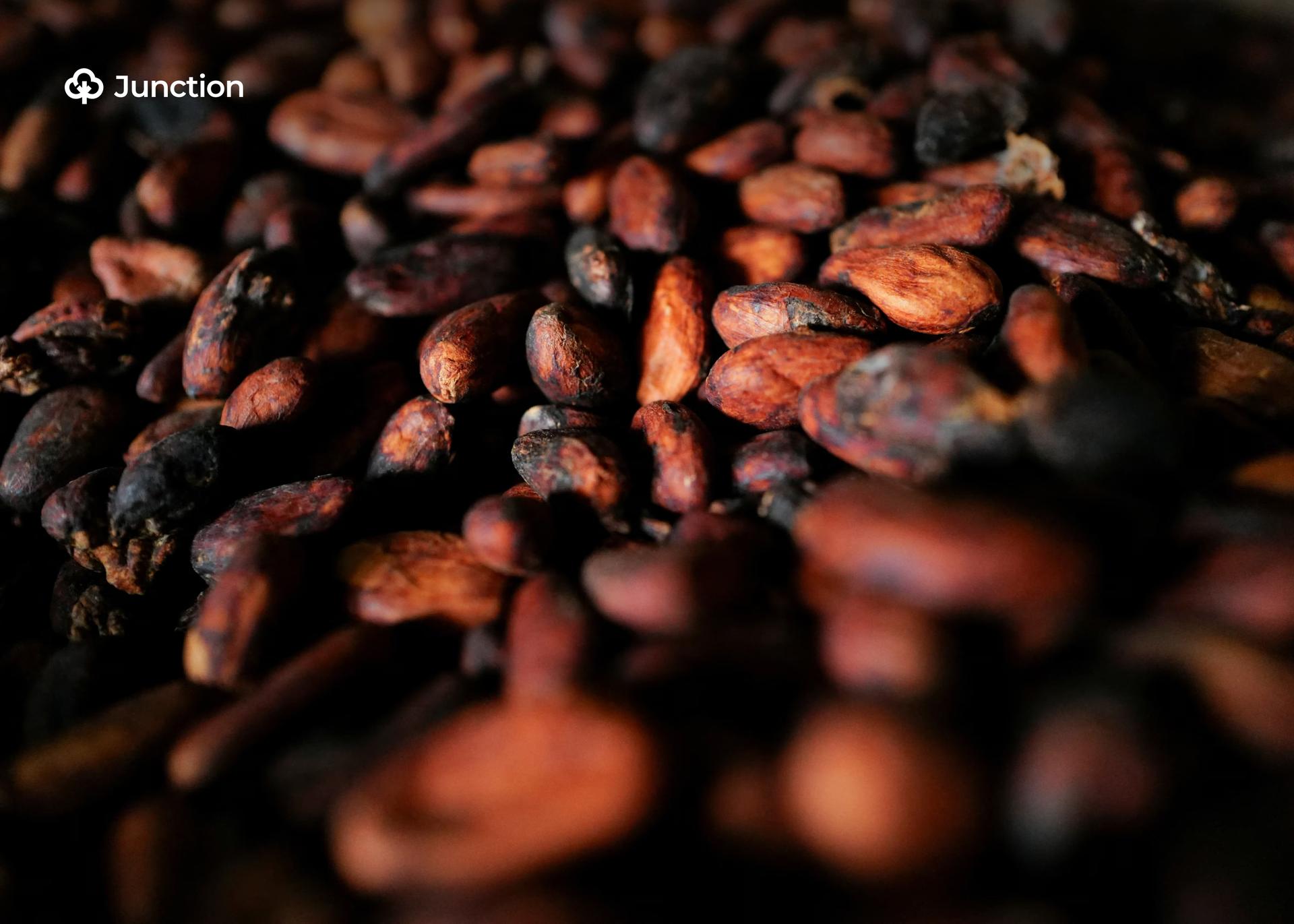
Despite the overall decline, cocoa-related products remained the backbone of Nigeria’s agricultural exports.
‘Standard quality cocoa beans’ topped the export basket at ₦254.13 billion, followed by ‘Superior quality cocoa beans’ valued at ₦193.96 billion and ‘Natural cocoa butter’ at ₦87.82 billion. Other major export items included cashew nuts in shell worth ₦58.80 billion and sesamum seeds valued at ₦48.79 billion.
Europe Leads as Key Export Destination
Europe remained Nigeria’s largest destination for agricultural exports in Q3 2025, accounting for ₦444.22 billion, while Asia followed with ₦246.24 billion.
A further breakdown showed that standard quality cocoa beans worth ₦108.27 billion and ₦67.68 billion were exported to Belgium and the Netherlands, respectively. Similarly, superior quality cocoa beans valued at ₦79.32 billion and ₦33.36 billion were shipped to the Netherlands and Malaysia, while natural cocoa butter worth ₦79.00 billion and ₦6.98 billion went to Germany and the Netherlands.
Agricultural Imports Rise Above ₦1 Trillion
On the import side, total agricultural goods imported in Q3 2025 stood at ₦1.10 trillion, representing 5.77% of Nigeria’s total imports.
This reflected a 25.03% increase compared to ₦882.24 billion in Q3 2024, although it was 6.87% lower than the ₦1.18 trillion recorded in Q2 2025.
Wheat, Fish and Palm Oil Drive Imports
Key agricultural imports during the quarter included durum wheat, mainly sourced from the United States and Russia, valued at ₦164.39 billion and ₦100.61 billion, respectively.
This was followed by frozen jack and horse mackerel (Trachurus spp.), imported from Chile and the Faroes Islands at ₦60.60 billion and ₦6.50 billion, and crude palm oil worth ₦21.80 billion from Malaysia.
Overall Trade Remains Strong Despite Farm Weakness
Beyond agriculture, Nigeria recorded steady growth in external merchandise trade in Q3 2025.
Total imports rose to ₦16.12 trillion, up 5.51% year-on-year and 5.47% quarter-on-quarter. China remained Nigeria’s largest source of imports, followed by the United States, India, the UAE, and Belgium.
Imported manufactured goods increased to ₦7.77 trillion, while other oil product imports fell sharply to ₦2.75 trillion, a 52.05% decline year-on-year.
Exports Driven by Oil, Not Agriculture
Total exports in Q3 2025 were valued at ₦22.81 trillion, representing an 11.08% increase year-on-year.
However, agriculture contributed just ₦786.62 billion, while crude oil dominated exports at ₦12.81 trillion, accounting for 56.14% of total export value. Other oil product exports rose to ₦7.01 trillion, despite a quarter-on-quarter decline.
Trade Surplus Shrinks as Imports Rise
Nigeria’s total merchandise trade stood at ₦38.94 trillion in Q3 2025, with exports accounting for 58.59% and imports 41.41%.
The country recorded a positive trade balance of ₦6.69 trillion, although this represented a 10.36% decline from the previous quarter, underscoring the pressure from rising imports—particularly in agriculture.
Why This Matters
The widening gap between agricultural exports and imports has implications for foreign exchange stability and food security.
While farm exports remain a critical source of non-oil earnings, the sharp quarter-on-quarter decline exposes vulnerabilities linked to production constraints, logistics bottlenecks, and limited value addition.
Rising imports of staples such as wheat, fish, and palm oil also reinforce Nigeria’s dependence on foreign food supplies, increasing pressure on foreign exchange at a time when policymakers are pushing import substitution and export diversification.
Ultimately, the data underline the urgency of boosting agro-processing, productivity, and competitiveness. Without sustained reforms, agriculture risks lagging further behind oil and gas in supporting Nigeria’s trade balance and economic resilience.

Chinwendu Ohabughiro
Chinwendu Gift Ohabughiro is a Lagos-based content writer and communications specialist passionate about people-centered stories that inspire change. A lifelong learner, she loves exploring languages, culture, storytelling—and anything involving chocolate.
Comments
More Articles Like This


