Latest news, analysis and data in the agriculture sector.
news
Nigeria’s ₦550bn BoA Plan Targets Smallholder Finance and Farm-Gate Price Risks
By Chinwendu Ohabughiro | Aug 20, 2026 | 0 comments

News in Brief:
— The Federal Government has approved ₦550 billion for the Bank of Agriculture to finance smallholder farmers and a Guaranteed Minimum Price Programme.
— A research says the intervention addresses issues of access to finance and exposure to price risks, but its impact will depend on effective implementation and investment.
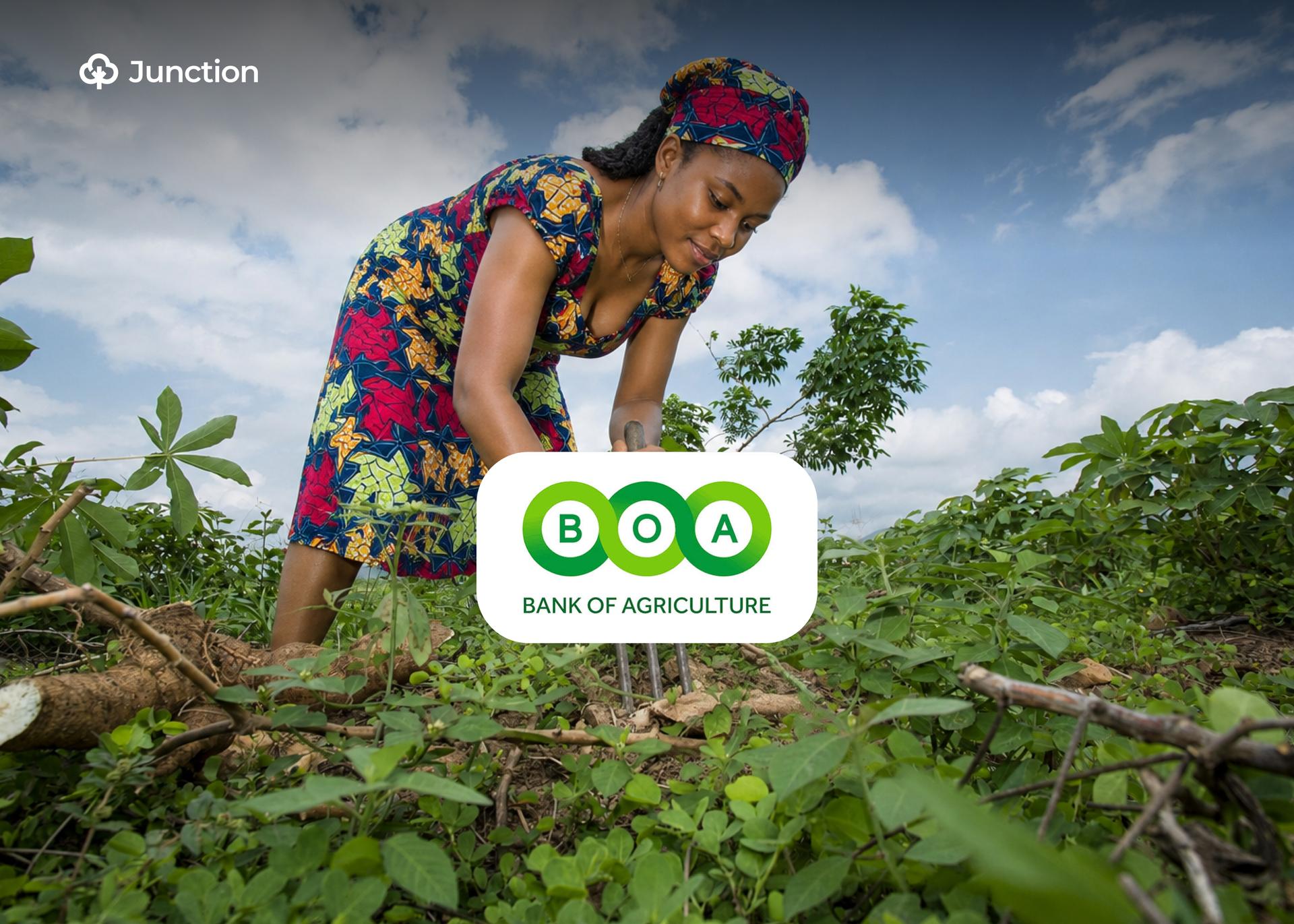
The Federal Government has approved a ₦550 billion programme for the Bank of Agriculture (BoA) to address challenges in Nigeria’s agricultural sector such as limited access to finance and farmers’ exposure to volatile produce prices.
CSL Research revealed that ₦250 billion of the allocation is for technology-driven financing for smallholder farmers and ₦300 billion for the Guaranteed Minimum Price (GMP) Programme.
According to the firm, the intervention's structure is appropriate because it targets financing and price risks simultaneously, while seeking to connect about two million smallholder farmers with aggregators, agricultural inputs and market channels.
However, it cautioned that the size of the allocation alone would not determine its success. Timely disbursement, beneficiary selection, monitoring and measures to prevent leakages will be critical to determining whether the intervention translates into higher agricultural output and improved food security.
Targets Smallholder Farmers
The financing component is being implemented under the Renewed Hope Smallholder Support and Value Chain Programme.
CSL Research said the technology-enabled initiative is designed to provide farmers with financing, quality inputs, extension services, weather information and market linkages.
The approach is also intended to connect smallholder farmers with aggregators and other participants across agricultural value chains.
For farmers, such linkages could address some of the challenges associated with producing for formal markets, particularly access to inputs, finance and reliable buyers.
Connecting financing with production inputs and market access could strengthen agricultural value chains and provide greater support to smallholder farmers and agribusinesses.
₦300bn Aims to Reduce Price Risks
The second component of the intervention is the ₦300 billion Guaranteed Minimum Price Programme.
This mechanism is designed to provide farmers with greater price certainty by supporting the purchase of agricultural produce at predetermined minimum prices.
The objective is to reduce the impact of sharp falls in farm-gate prices, particularly when excess supply places downward pressure on what farmers receive for their produce.
The programme could also support agricultural stock management and contribute to greater stability within agricultural markets.
However, CSL Research stressed that the GMP should not be interpreted as a direct solution to Nigeria’s high food prices.
“While the GMP helps reduce price risks for producers, it is important to remember that it isn’t a tool for directly controlling consumer food prices,” the firm said.
Guaranteed Prices Not Silver Bullet
The distinction between farm-gate prices and consumer food prices is important.
Even if farmers receive greater protection against price declines, the prices paid by consumers will continue to depend on several factors, including agricultural output, storage, transportation, distribution and overall market supply.
CSL Research stated that the effect of the intervention on food inflation would depend largely on whether the financing results in increased production and improves the movement of agricultural commodities from farms to consumers.
If increased financing leads to higher yields and cultivated output, greater supply could eventually ease pressure on food markets. The impact would be limited if additional production continues to face bottlenecks in storage, transportation, processing and distribution.
Implementation would be more important than the headline value of the allocation. Timely and transparent disbursement, effective beneficiary selection, monitoring and leakage control are critical factors.
These safeguards are particularly important for a programme targeting millions of farmers, where inefficient distribution or weak monitoring could reduce the amount of funding that ultimately reaches productive agricultural activities.
The research firm said investors and policymakers should monitor the pace of fund disbursement, farmers’ production response and the effectiveness of measures designed to prevent leakages over the coming agricultural seasons.
Agriculture Requires More Than Credit
CSL Research also warned that the BoA intervention cannot address Nigeria’s agricultural constraints on its own.
It identified irrigation, mechanisation, improved seeds, fertilisers, storage, transportation, processing and rural infrastructure as areas requiring complementary investment.
These investments are important because access to credit does not automatically translate into higher agricultural output if farmers continue to face inadequate irrigation, poor rural roads, insufficient storage or limited processing capacity.
The firm said the intervention could represent a step forward for the sector, particularly given persistent constraints around affordable credit, storage and processing capacity, rural infrastructure and post-harvest losses.
While supporting the objectives of the Guaranteed Minimum Price (GMP) Programme, the researchers said the mechanism would need to be carefully designed and implemented.
It warned that poorly calibrated price guarantees could distort markets or weaken incentives for private-sector participation.
The effectiveness of the programme will therefore depend on how minimum prices are determined, how produce purchases are managed and how the intervention interacts with existing private-sector agricultural markets.
A balance will be required between protecting farmers from severe price declines and maintaining market incentives for producers, aggregators, processors and other private-sector participants.
Impact Will Depend on What Happens on Farms
The ₦550 billion allocation provides a substantial financing intervention for Nigeria’s agricultural sector, but CSL Research said its ultimate value should be measured by outcomes rather than the size of the funding announcement.
The key indicators will include whether more farmers receive financing and inputs, whether agricultural production increases, whether farmers gain more reliable access to markets and whether price volatility is reduced without distorting private-sector participation.
The impact on food inflation will also depend on whether increased agricultural production is matched by adequate storage, processing, transportation and distribution capacity.
As CSL Research put it, the intervention’s effect on food security and inflation will hinge on execution and complementary investment in irrigation, mechanisation, storage and rural infrastructure.
For Nigeria’s farmers, therefore, the critical question is no longer simply how much money has been allocated to agriculture, but whether the funding reaches productive activities and translates into more food being produced, stored, processed and delivered to consumers.

Chinwendu Ohabughiro
Chinwendu Gift Ohabughiro is a Lagos-based content writer and communications specialist passionate about people-centered stories that inspire change. A lifelong learner, she loves exploring languages, culture, storytelling—and anything involving chocolate.
Comments
More Articles Like This


