Latest news, analysis and data in the agriculture sector.
news
Oil Palm Experts Warn Nigerian Farmers Against Unverified 'Supergene' Seedlings
By Noah Aderoju | Oct 22, 2026 | 0 comments

News in Brief:
— African and Malaysian oil palm experts warn Nigerian farmers about Supergene Oil Palm Seedlings being sold online.
— The experts claim that they cannot link the product to any licensed seed producer, alerting producers to the danger of using fake inputs.
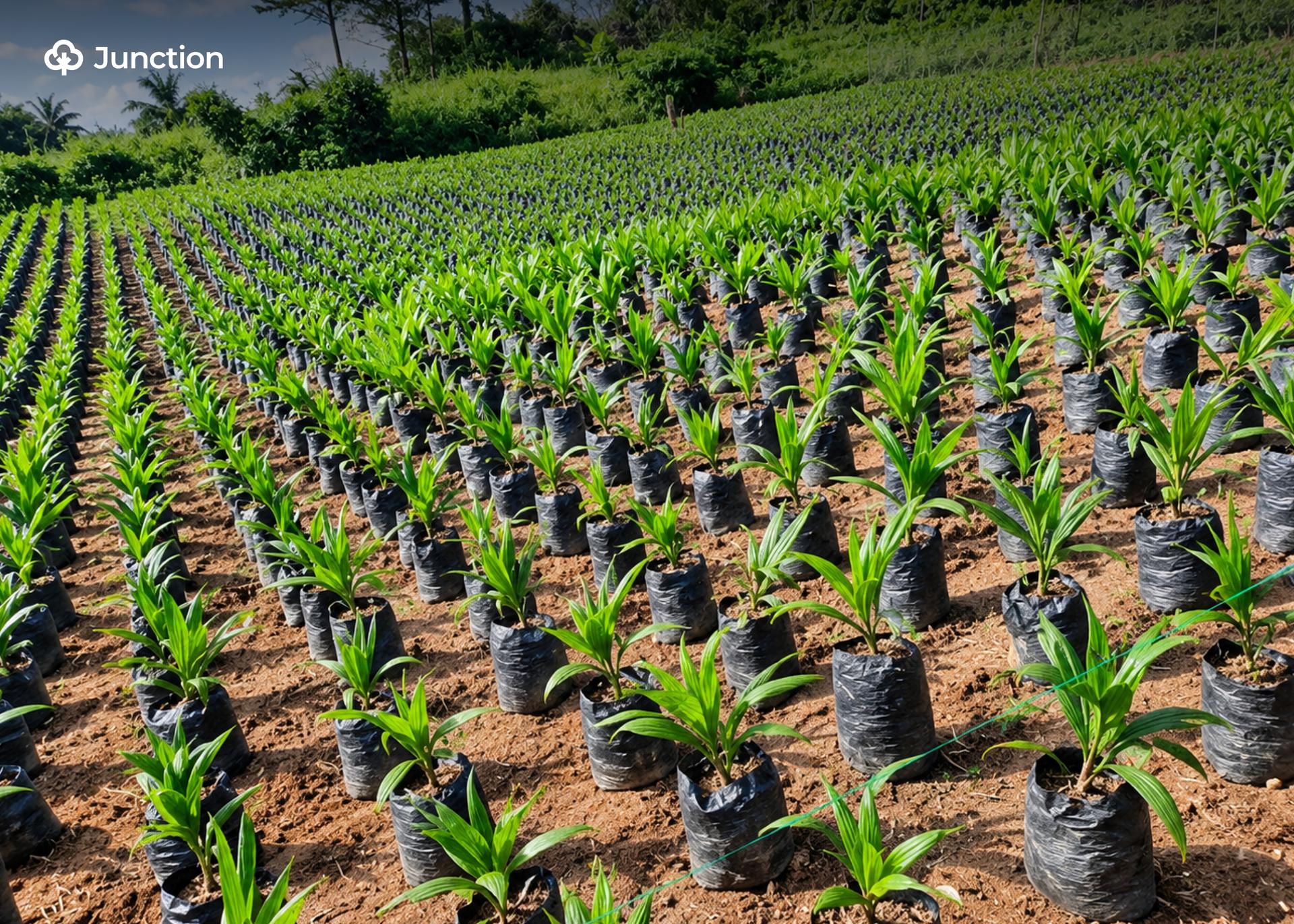
Oil palm experts have warned Nigerian farmers to be careful with Supergene Oil Palm Seedlings sold online, saying the product cannot be traced to any licensed seed producer in Malaysia.
The warning came from video clips of a workshop organised by the Nigerian Institute for Oil Palm Research (NIFOR) in Benin City, Edo State, between October 12 and 16, 2026. NIFOR's YouTube channel confirmed the warning video as genuine and consistent with the event's setting.
In the reels shared by Facebook user Kalu Kelechi Kalu, representatives of the International Society for Oil Palm Breeders (ISOPB) and the Malaysian Palm Oil Board (MPOB) answered questions about the trending oil palm seed.
Supergene seedlings are widely advertised in Nigeria as a high-yielding Malaysian hybrid oil palm seed that promises fruiting in a very short time (2 to 3 years) compared to other seeds.
Unlicensed Seed Producers
Dr Rajinder Singh of the Advanced Biotechnology and Breeding Centre, Malaysian Palm Oil Board (MPOB), revealed that the board's had not found the seedling's DNA in its records.
He further clarified that every seed-producing company in Malaysia must hold an MPOB licence, which is granted after inspection against national standards.
Singh added that no credible Malaysian seed company advertises on social media. He said that if the company promoting the seedlings in Nigeria is the same one MPOB has encountered, it is not a licensed producer.
Dr Claude Bakoume, Africa Regional Representative of the International Society for Oil Palm Breeders (ISOPB), confirmed Supergene's popularity in Africa.
He said that the people he spoke to in Malaysia told him no such product exists. He suggested the name may have been borrowed from genuine gene-based breeding programmes to make the seedlings sound more attractive to buyers.
Bakoume cautioned farmers against blindly trusting everything marketed as coming from Malaysia.
Why Oil Palm Farmers Should Be Wary
Nigeria’s oil palm sector is expanding as the country attempts to raise its output. Bad players could exploit smallholder farmers, who already have limited knowledge as they gradually adopt certified seeds.
Earlier this year, Joe Onyiuke, president of the Oil Palm Growers Association of Nigeria (OPGAN), revealed that Nigeria has too few standard nurseries to give farmers certified planting materials. He said smallholders control about 80 per cent of the sector and that OPGAN has a five-year plan to replant 1.5 million hectares.
While NIFOR’s seed production is growing, it still has not covered all the needed areas. At the workshop, NIFOR's Executive Director, Dr Isona Gold, said the institute has reached four tonnes of palm oil per hectare yearly on medium and large farms and 3.5 tonnes on smallholder farms as it works towards lifting output to six tonnes.
For farmers, the cost of a wrong choice is high. Oil palm trees typically take about four years to bear fruit, so a farmer who plants unverified seedlings may not notice immediately.
Supergene Oil Palm Seedlings are advertised online for roughly ₦1,500 to ₦2,500 each. Sellers claim they fruit faster, produce higher yields, and grow taller more slowly for easier harvesting. These claims come from sellers' own advertisements and were not independently confirmed.
Malaysia's Dr Singh pointed out that anyone can ask to see NIFOR's seed garden, but cannot demand such from an online seller. He said farmers should buy only material whose seed source has been verified.
However, the experts did not say whether the seedlings sold as Supergene perform poorly in the field. Their concern was that they could not verify the source.

Noah Aderoju
Noah Aderoju is a multimedia journalist and researcher with a passion for telling stories.
Comments
More Articles Like This


