Latest news, analysis and data in the agriculture sector.
news
Paddy Rice Prices Show Mixed Movements Amid Nigeria’s Broader Food Crisis
By Obinna Onwuasoanya | Sep 11, 2025 | 0 comments


News in brief: -Paddy rice prices on the AFEX Commodities Exchange have swung sharply in 2025, rising as high as ₦660.86 per metric tonne before tumbling on supply and cost pressures.
-Beyond the exchange, retail rice prices remain volatile nationwide, with imports, inflation, and policy shifts deepening Nigeria’s food security crisis.
Paddy rice, a staple in Nigerian diets and a key driver of food security, has recorded fluctuating movements in the 2025 trading year on the AFEX Commodities Exchange, reflecting the combined effects of supply shifts, seasonal harvests, and market demand. But beyond the exchange, the rice market is also being reshaped by inflation, imports, and policy inconsistencies that continue to affect Nigerian households.
Volatility on the Exchange
From March through September, paddy rice prices swung between notable gains and steep declines. In April, the commodity slipped -6.58% before rebounding 13.20% later in the month. June saw the year’s strongest rally at ₦660.86 per metric tonne, followed by a -9.15% tumble before prices steadied in July. By early September, paddy rice surged 8.57% to ₦600.56, underlining its volatile performance.
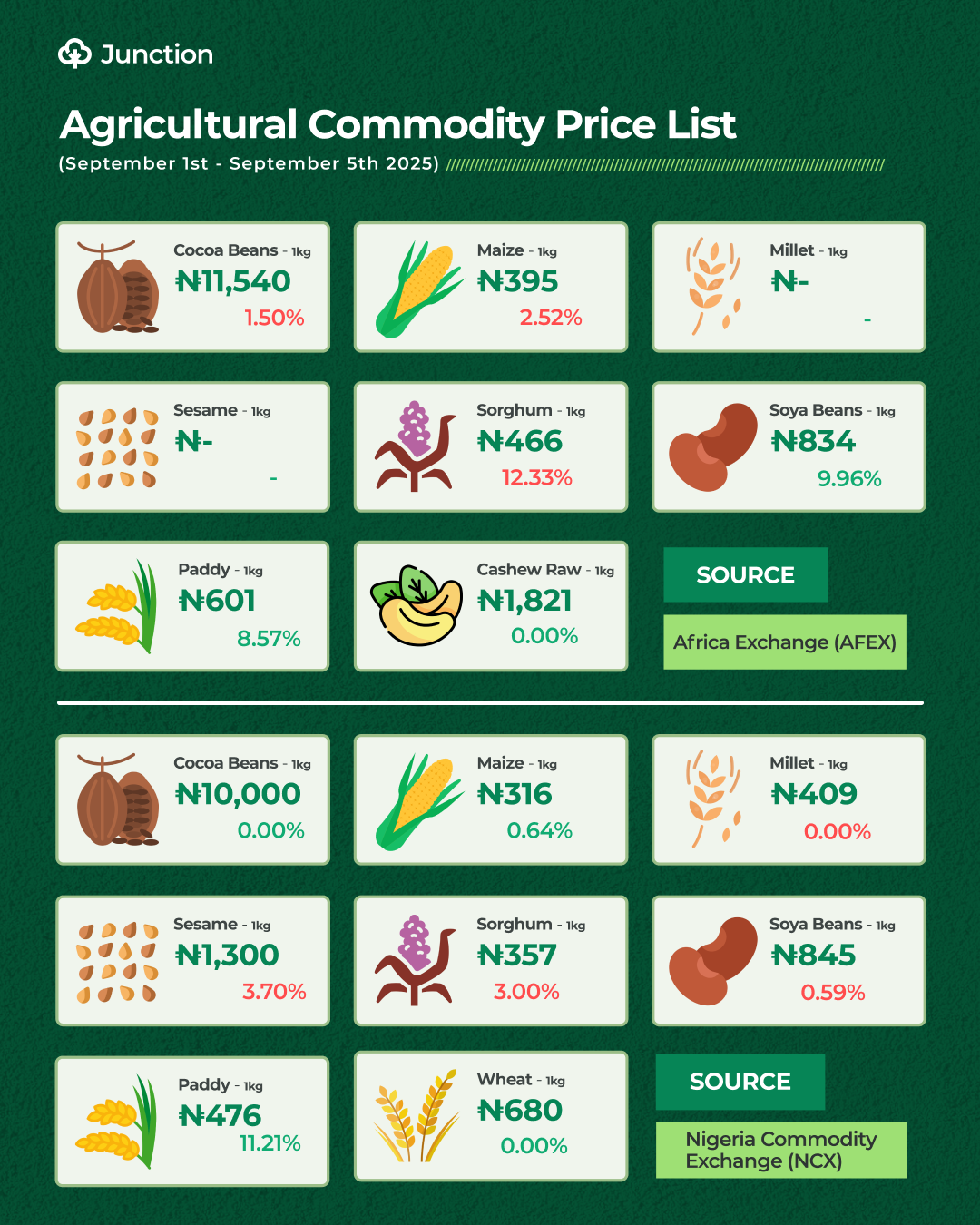
Analysts attribute the fluctuations to inconsistent rainfall patterns, storage bottlenecks, and rising farm input costs. For traders, this creates speculative opportunities, but for farmers and consumers, it highlights instability in the country’s most consumed staple.
National Price Pressure
While AFEX charts the commodity’s wholesale movement, retail rice prices on the ground tell a deeper story. In December 2024, Bloomberg reported rice selling at ₦75,000–₦99,000 for a 50kg bag, sparking riots, stampedes, and protests in several states. By April 2025, prices temporarily dropped to ₦58,000 due to a surge in Indian rice imports through the Benin Republic. But by July, retail prices shot up again — as high as ₦100,000 in Lagos markets — after the expiration of the 150-day duty-free import window.
Industry stakeholders warn that these short-term fixes and selective import waivers have undercut local rice farmers and millers, leaving many with unsold harvests while cheaper smuggled imports dominate urban markets.
Food Security Risks
With food inflation above 39% and over 30 million Nigerians projected by FAO to face acute hunger this year, experts say stabilising paddy rice is not just an economic issue but a humanitarian one. They argue that sustainable solutions, including investment in irrigation, storage, transparent import policies, and support for local millers, are urgently needed to prevent Nigeria’s rice sector from collapsing under the weight of policy inconsistencies and global market shocks.

Obinna Onwuasoanya
Obinna Onwuasoanya is a Lagos-based tech reporter, editor, and SEO specialist with over seven years of professional writing experience. A versatile storyteller, he also works as a ghostwriter and fiction author, with his works featured in leading online and print publications. In 2018, he was shortlisted for the prestigious Writivism Short Story Prize.
Comments
More Articles Like This


