Latest news, analysis and data in the agriculture sector.
news
TAO Honey Beans Pilot at RUGIPO, AAUA Nears Harvest
By Noah Aderoju | Nov 28, 2025 | 0 comments

News in Brief
-Students at RUGIPO and AAUA harvest organic honey beans from TAO's five-hectare pilot farms, transitioning to processing for market-ready sales after months of hands-on cultivation.
-TAO eyes expansion across Nigeria's institutions, focusing on organic methods, youth skills, and value chains like preservation to boost commercial viability.
Participants and stakeholders of The Agriculture Option (TAO), a youth-focused farming project at Rufus Giwa Polytechnic (RUGIPO) and Adekunle Ajasin University, Akungba (AAUA), are set to harvest their pilot honey beans plantation.
The five-hectare farms at the respective institutions have matured. They will be harvested over the next few days, to be processed, packaged, and sold to the market, marking the success of the pilot phase of the project.
TAO’s Youth-Inclusive Agriculture Drive
Earlier in September 2025, as part of its nationwide drive for youth-inclusive agriculture, TAO launched farming initiatives across higher institutions in Nigeria, including RUGIPO and AAUA, where students farm with technical and financial support from the company and access to land and agricultural facilities from the institution.
A five-hectare organic honey bean plantation and a ten-hectare cassava plantation were launched in the Owo and Akungba campuses. Managed on the ground by young farmers in the institution, they are backed by the TAO ecosystem. This digital agriculture solution supports youth-focused agribusiness throughout cultivation. Expert agronomists were also on the ground to guide them through the use of modern organic farming equipment and resources.
Students Share Experiences on Learning Agribusiness Beyond the Classroom
Speaking about her experience during the project, Aremo Teniola, a student farmer who participated in AAUA, described her experience as a full-circle journey. She gained much-needed exposure to practical farming knowledge as opposed to the typical theoretical learning she was accustomed to as a student.
“I didn’t expect the crops to react so fast to the water challenge and weed competition. One week of delayed weeding and the farm looked like weeds were taking it over,” she said. She noted how managing the cowpea farm showed her the importance of responsibility and responsiveness as a farmer.
Teniola also expressed excitement about continuing the project, explaining that the experience has prepared her for a future personal farming venture.
As the farm representative and student coordinator for the TAO project at AAUA, Adigun Omololu’s experience extended beyond just farming activities. He had to take up managing humans, making hard decisions alongside cultivating the crops.
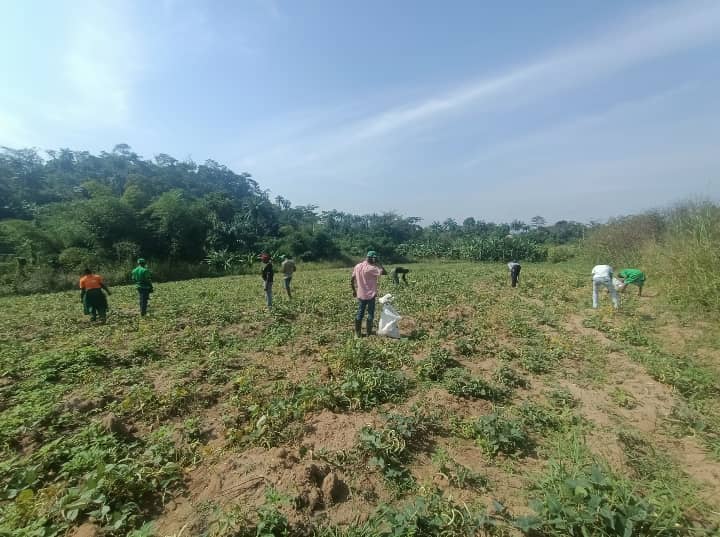
“As the farm rep and coordinator, I had a front row seat in the technical side and human side of the work. The experience of coordinating people, managing field operations and still getting my hands dirty has been intense, yet also rewarding and educational. It further deepened my respect for farming,” he said.
The final year agriculture student echoed how instructive his experience managing the challenge of cultivating cowpea was for him, exposing him to the tactics and solutions to addressing moisture stress and weed competition in a cowpea farm
Omololu looks forward to the time when the project will be scaled up to match its potential.
“I see opportunity for research, student training and even commercial operations on a large scale if we keep building on the foundations we have set,” he stated.
Sesan, the farm representative and coordinator in RUGIPO, described the project as a beautiful and very educational experience. It exposed him to the business management side of the agriculture industry.
Working with limited resources to achieve great results and ensuring the particular demands of organic farming, which means no use of chemicals like pesticides or herbicides, were the highlights of his experience.
“From the beginning, with land preparation, harrowing, planting and pest control using organic methods, I really experienced a lot. This experience will be beneficial for me when I am working on my own as a farmer or investor,” he said.
He expects that with the continuation of the project, there will be increased participation and expansion, providing even more business opportunities for the school and students.
TAO Project Lead Shares Insights on Organic Honey Beans Production
Speaking about his experience as the TAO project lead, Aniede Essien described it as a great learning opportunity for both himself and the students. Working with the team of young farmers simultaneously across the schools and managing engagement with other stakeholders was an interesting and fulfilling experience for him.
Essien shared that before the project, he conducted a survey on organic honey beans in the north and discovered that none were available in the open market. This is why he was excited that the project could produce not just honey beans, but organic honey beans in the South-West of Nigeria.
He stated that the next step is to apply organic preservation. Sellers already use controlled amounts of inorganic pesticides, such as Sniper, to manage pests.
He reaffirmed the project's commitment to ensure 100% organic operation. To prove their success in the quest, he said they intend to share their findings on organic preservation methods to help change the prevalent harmful practice in the market.
Essien revealed that TAO plans to expand its future operations and scale up the potential of the farms to make them more viable and self-sustaining while expanding to other schools.
He also noted that some of the students are already eager to work with the company on their personal farming project.
“TAO is on the right track in empowering youth and encouraging them to venture into agriculture,” he said.
Processing and Packaging Produce
The success of this pilot phase will pave the way for the food processing and packaging stage. Raw farm harvests will be processed for value addition and to make them market-ready. This aligns with TAO's plan to implement an end-to-end agriculture initiative that ensures a farm-to-shelf production cycle in all its interventions.
According to the TAO Project manager, Seun Adeniyi, the processing stage will also involve students, providing them with a comprehensive experience of the full food production value chain. Packaging will also reflect its origin, crediting the efforts of the young farmers and aligning with international best practice of traceability.
Expanding Agricultural Projects Across Institutions
Beyond the honey beans farms in RUGIPO and AAUA, TAO is currently finalising additional projects across various agricultural value chains.
Fish and poultry farming are already underway at the Aquatech College of Agriculture and Technology, Ibadan, Oyo State. Land preparation is also ongoing for rice farming, livestock farming, and other food production value chains at the Federal University Dutse and Bayero University Kano. Plans to expand to more Nigerian schools in different regions are underway.

Noah Aderoju
Noah Aderoju is a multimedia journalist and researcher with a passion for telling stories.
Comments
More Articles Like This


