Latest news, analysis and data in the agriculture sector.
news
US 2024 Cattle Report Shows A 2% Dip, Reflecting Trends In Beef, Dairy Sectors
By Obinna Onwuasoanya | Feb 01, 2024 | 0 comments

*News in brief:**- The US cattle industry saw a 2% decline in overall inventory, including beef cows and calves, according to January 2024 report.
- This drop in stock signals a nuanced shift in herd dynamics and changing trends in feeding practices as cattle for the slaughter market rise by 2% increase.***
In a noteworthy shift, the United States has witnessed a 2% drop in overall cattle and calves, a 2% decrease in cows that have calved, and a 2% reduction in beef cows. According to data from the U.S. Department of Agricultureâs National Agricultural Statistics Service (NASS) release, the downward trend began in 2019 when the country had close to 94 million cattle and calves in stock.
[caption id="attachment_5889" align="aligncenter" width="720"]
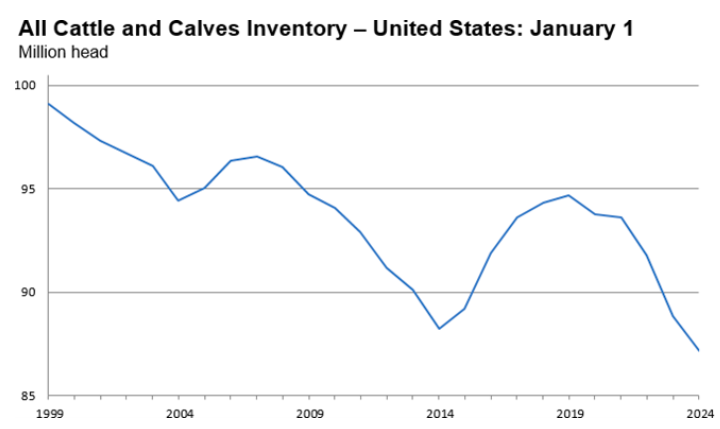 All head of cattle and calves inventory in the United States as of January 1, 2024. Image Source: U.S. Department of Agricultureâs National Agricultural Statistics Service (NASS).[/caption]
This decline extends to various facets, including heifers, steers, bulls, and calves, underlining a 3% decrease in calves under 500 pounds and a 2% drop in the 2023 calf crop. Notably, cattle on small grain pastures in key states fell by 2% decrease, also reflecting regional impacts.
"There were 87.2 million head of cattle and calves on U.S. farms as of January 1, 2024," the statistics authority said. As the global leader in beef production, decline in the US' cattle stock could have impact on the international market.
It is also worthy to note that contrasting narrative emerges as cattle on feed for the slaughter market in the North American country saw a 2% increase, totaling 14.4 million head. This upward trend, particularly in feedlots with capacities of 1,000 or more head, underscores a shift in focus.
As the beef industry navigates these fluctuations, stakeholders face a complex landscape marked by evolving dynamics in herd composition, feeding practices, and regional considerations.

Obinna Onwuasoanya
Obinna Onwuasoanya is a Lagos-based tech reporter, editor, and SEO specialist with over seven years of professional writing experience. A versatile storyteller, he also works as a ghostwriter and fiction author, with his works featured in leading online and print publications. In 2018, he was shortlisted for the prestigious Writivism Short Story Prize.
Comments
More Articles Like This


