Latest news, analysis and data in the agriculture sector.
news
What Can ₦5,000 Buy a Young Nigerian at Abuja’s Sauka Market?
By Adeyemi Okeleye | Oct 20, 2026 | 1 comment


News in Brief:
— A ₦5,000 budget can cover the ingredients for a simple rice and egg stew at Abuja’s Sauka Market, but the cost may exceed the budget depending on prices and available kitchen supplies.
— For young Nigerians earning below ₦100,000 monthly, rising food costs make budgeting increasingly difficult, forcing trade-offs between feeding, saving and other essential expenses.
For a student, a National Youth Service Corps (NYSC) member or an employed young Nigerian earning less than ₦100,000 monthly, shopping for food at the market requires careful budgeting and prioritising.
With a budget of ₦5,000, we went to Sauka Ultra Modern Market, a food market opposite the Immigration Office in Abuja, as a young person planning a one-time meal. We gathered that ₦5,000 can buy ingredients for a simple rice and egg stew, although the cost may exceed the budget depending on market prices and available pantry supplies.
Cooking a Meal on a Tight Budget
A budget-conscious shopper can substitute four or five eggs, estimated at ₦1,000, for meat or fish when preparing stew. Tomatoes and pepper costing ₦1,500 to ₦2,000, onions worth ₦300, palm oil at ₦700, and seasoning and salt estimated at ₦500 could bring the stew ingredients to between ₦4,000 and ₦4,500.
Adding half a mudu of rice at approximately ₦1,000 pushes the total to between ₦5,000 and ₦5,500, assuming the shopper has cooking gas and basic kitchen equipment. The cost could be lower if rice, oil, salt or seasoning are already available at home.
However, the budget highlights the trade-offs young Nigerians face when deciding between cooking at home and buying prepared meals.
Bulk Buying Versus Convenience
For young single persons, eating at local restaurants may sometimes be cheaper or more convenient than purchasing ingredients, cooking and preserving leftovers. Others may prefer preparing meals at home because they want greater control over ingredients, oil quantities and food hygiene.
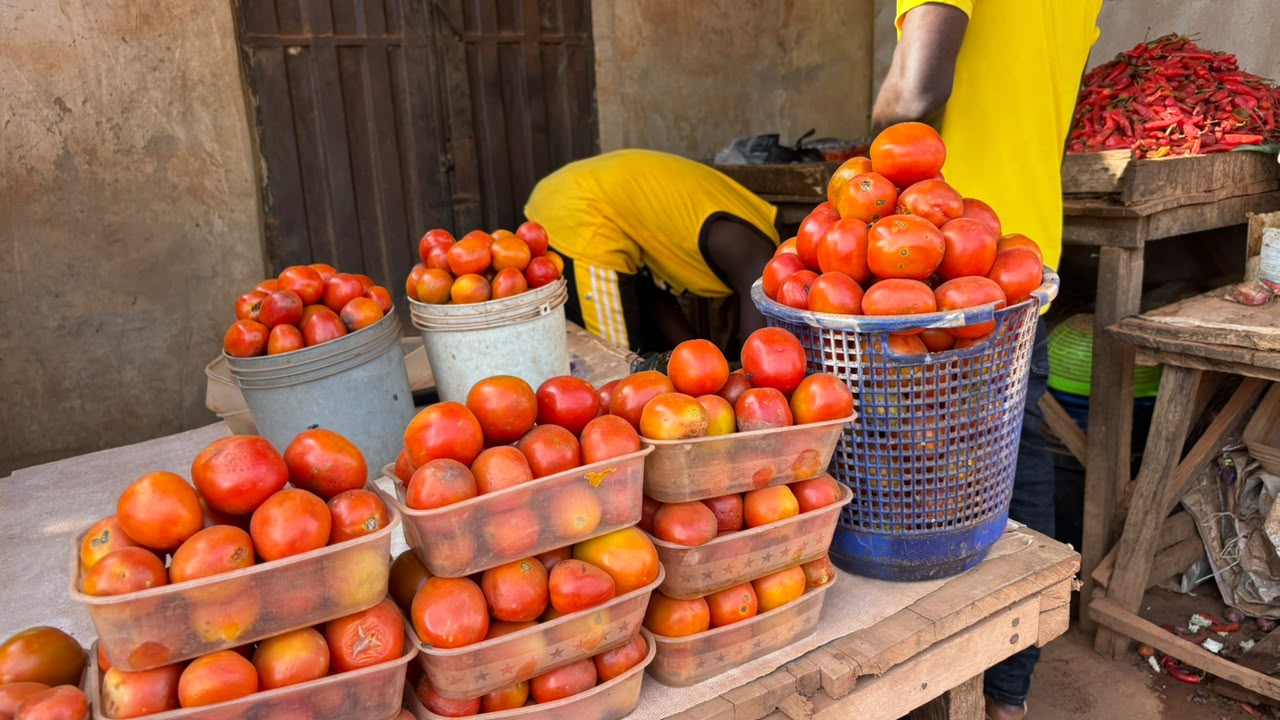
A survey of Sauka Market showed that bulk purchases could offer better value for larger households. Tomatoes sold for ₦7,000 per basket and ₦4,000 per paint bucket, while palm oil cost ₦3,400 for two litres. Power Oil and King’s Oil were priced at ₦3,500 and ₦4,500, respectively, for the same volume.
Nevertheless, bulk buying requires adequate storage and preservation, which may add costs for young people living alone.
Beyond One Meal, Cost of Living in Nigeria
Budgeting ₦5,000 for a single meal may seem rational in isolation, but it is unsustainable when considered against the average income of young Nigerians.
According to the 2025 Piggyvest Savings Report, many Gen Z Nigerians earn less than ₦100,000 monthly, while some have no valid income source. For people like this, affording a ₦5,000 meal three times a day for a whole month is theoretically impossible. This is why most Nigerians' monthly income goes to feeding, and it is barely enough to sustain them till the end of the month, even as other aspects of their lives like rent, savings and personal development are lacking.
Increasing food prices add to the high cost of living in Nigeria. While tight budgeting, substitution and prioritisation are adaptive strategies, they still are not enough to mitigate the impact of rising food costs.

Adeyemi Okeleye
Adeyemi Okeleye is a First-Class graduate of International Relations with interests in agriculture, research, and sustainable development. He is passionate about effective communication, innovation, and driving positive change.
Comments
More Articles Like This


