Latest news, analysis and data in the agriculture sector.
spotlight
How EcoBloom Farm is Growing Nigeria's Next Generation of Vertical Farmers
By Chinwendu Ohabughiro | Jul 20, 2026 | 1 comment

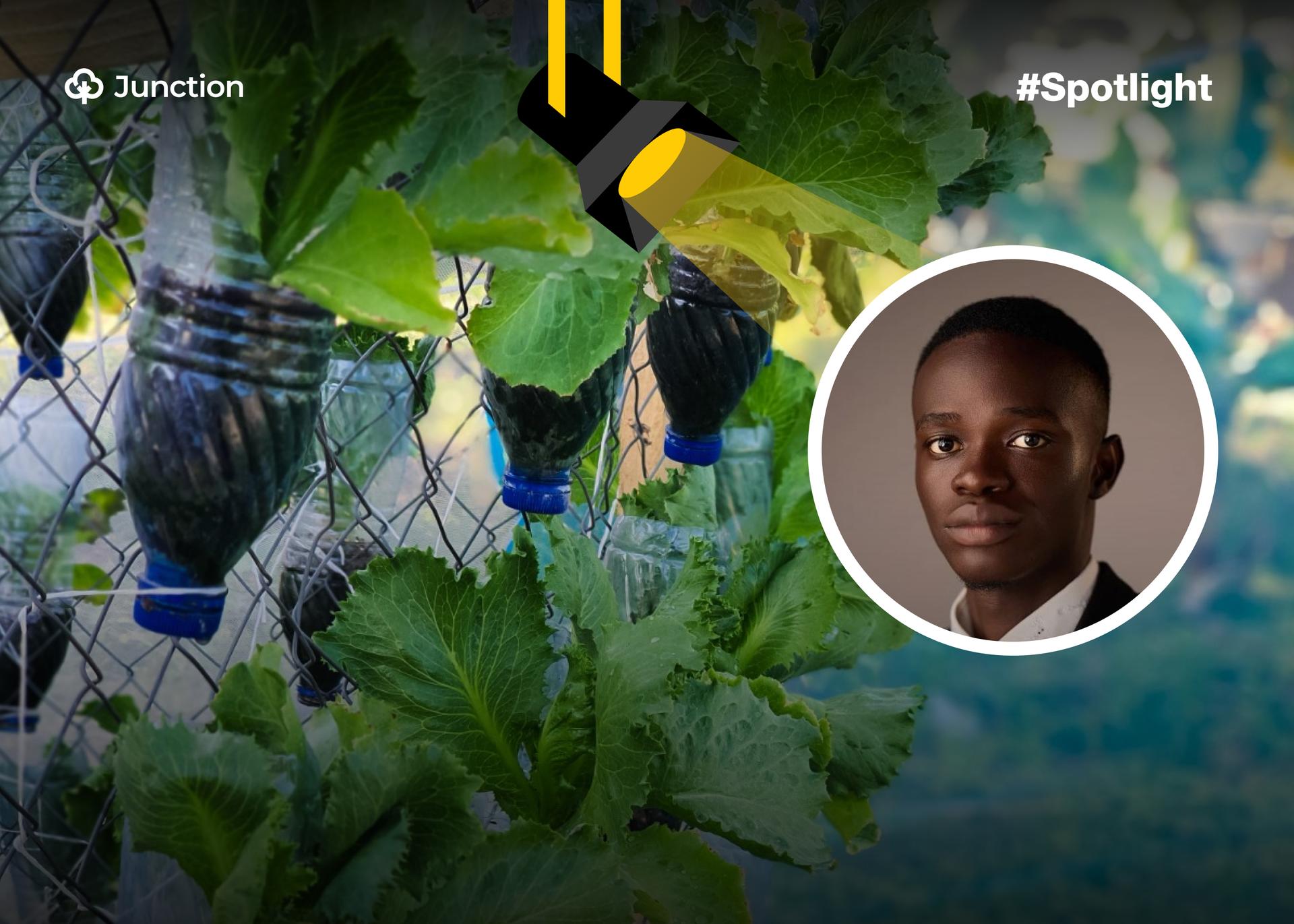
Every rainy season, plastic bottles would pile up along the waterways of Moses Gaskiya's university campus in Zaira, clogging drains and worsening flooding. While most students walked past the mess, Moses saw a farming solution.
Today, that same plastic waste forms the backbone of EcoBloom Farm, a vertical farming venture he built from a campus grant into a training ground for more than 30 young farmers, with an AI-powered irrigation system on the way. At just 23, Gaskiya is one of a growing number of young Nigerians proving that agriculture can be both a livelihood and an act of innovation.
Roots in a Farming Household
Moses didn't set out to become a farmer by accident; his path there started with hardship. He lost his father at the age of six, leaving his mother, a civil servant, to raise the family largely on her own.
To make ends meet, she turned to farming as a second source of income. Watching her succeed changed how Moses saw the profession entirely.
"I saw how farming was bringing in more money than a civil service job, and that's when I started liking agriculture," he recalls. "That's when I started seeing the possibilities in agriculture."
That realisation led him to pursue a degree in agriculture, majoring in soil science, a decision his relatives actively discouraged. Many pushed him toward medicine or engineering instead. He chose agriculture anyway, and hasn't looked back.
From a Waste Problem to a Vertical Farm
The turning point came in 2024, near the end of his third year, when Moses learned about a grant opportunity from Sahel Consulting that required applicants to propose an innovative idea.
Rather than default to a common idea like seedling nurseries, Moses looked at a problem already in front of him: plastic bottles clogging his campus's drainage systems and worsening flooding.
"I thought to myself, what if I do something in agriculture with these plastic bottles?" he says. "The only thing that would come to my head was vertical farming."
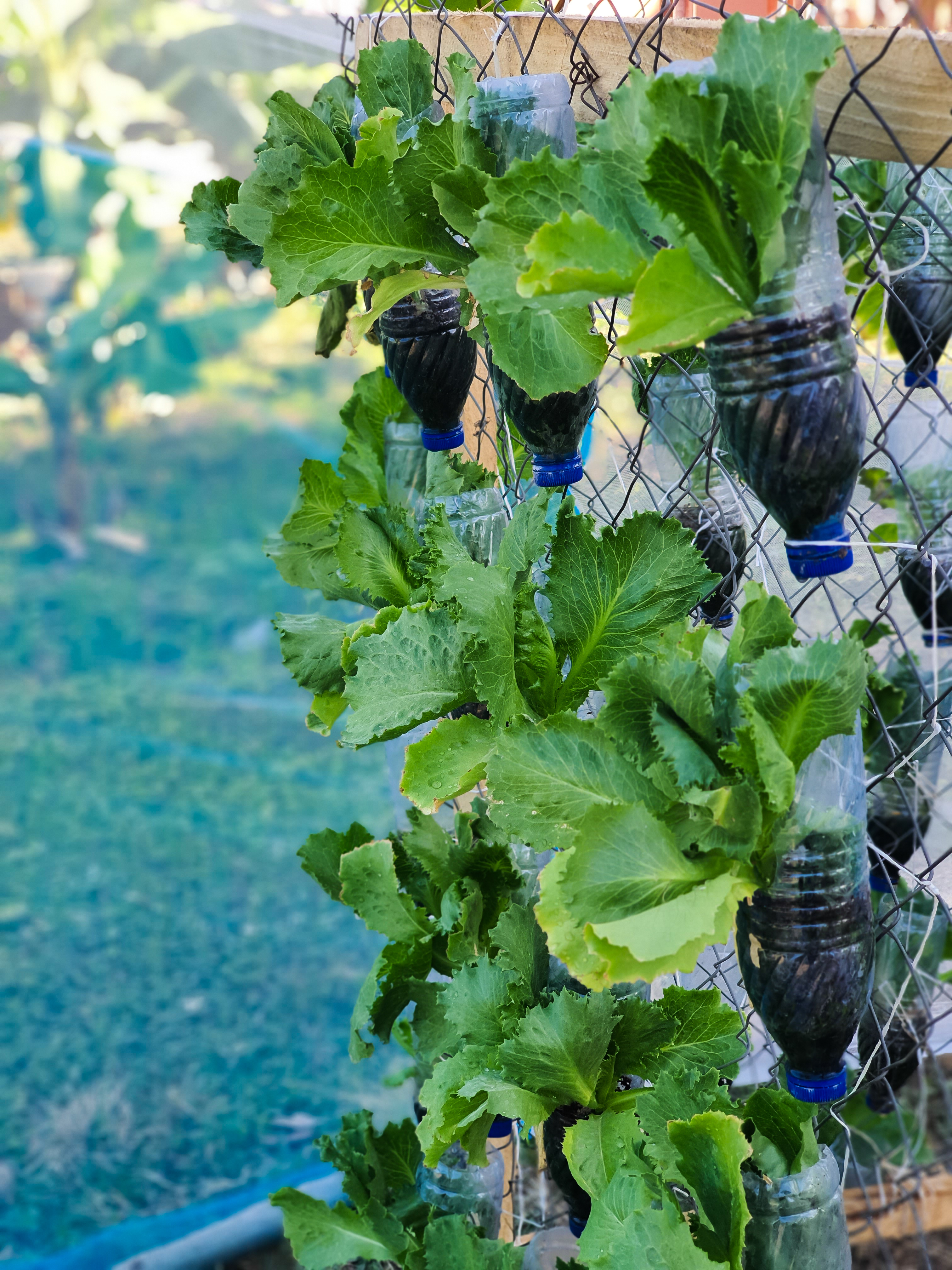
He pitched the idea, secured the grant, and used it to launch what would become EcoBloom Farm in August 2024, a system that repurposes discarded plastic bottles into vertical growing units for vegetables, tackling waste and food access at the same time.
Beyond the funding, Sahel Consulting paired him with a mentor, Ms Abisola Fashina, who guided him through the fundamentals of running a farm as a business, from record-keeping to daily operations. As Moses puts it, the scholarship ‘was beyond just money.’ Fashina remains his mentor even after the programme concluded.
The Trial-and-Error Season That Taught Everything
Building something that hadn't been tried before came with a steep learning curve. In his own words, the first three months of EcoBloom Farm were trial and error. It came with several challenges, but Gaskiya mentions that the people around him helped him, providing him with guidance.
Some of the early hurdles the idea faced included nutrient imbalance. Moses initially formulated his own nutrient solution for the crops, which led to visible plant stress.
Also, when leaves initially began yellowing, standard knowledge pointed to nitrogen deficiency. However, increasing nitrogen didn't help. He only discovered later that he had misdiagnosed the issue. After taking samples to his department's soil science lab, he discovered the real issue was algae thriving inside the bottles, caused by sunlight passing through the clear plastic.
On his dean's recommendation, he began painting the bottles to block light, which solved the algae problem.
Moses claimed that during this period, he leaned heavily on his coursemate and experienced vegetable farmer, Nelson John; his faculty dean at the Ahmadu Bello University (ABU), Prof. S.B. Abdu; and Dr Mrs Hinjari, the staff advisor assigned to him through the Sahel program. All three remain part of his journey today.
The Step-down Requirement
One condition of the Sahel grant was a "step-down" requirement: Moses had to train others in what he'd learned. What began as an obligation became one of the most meaningful parts of his journey.
During a school break, he opened training applications and received over 350 responses, far more than he anticipated. Since most applicants weren't near his campus, he split the program into an online session for participants far away and a physical, hands-on session at the farm for those nearby.
His early training modules covered container farming, nutrient formulation, and vegetable production.
The venture initially operated under the name "Farm with Gaskiya," but a naming conflict during registration with Nigeria's Corporate Affairs Commission (CAC) led to the rebrand as EcoBloom Farm. Gaskiya confesses that the rebranded name better positions the venture for national and international growth.
The training program didn't just build community goodwill; it opened doors. Moses cites it as the foundation for his proudest achievement to date: winning the Agri-Innovation Hackathon in Kaduna State in December 2024, a competition open to entrants across Northern Nigeria.
The win connected him with other agripreneurs and expanded his network of mentors, proof, he says, that the training program's ripple effects went both ways.
Smart Farming Technology
Manually irrigating a vertical farm twice a day takes its toll. This monotonous problem pushed Moses toward his current project: a partnership with WSTARS Technology to develop Plant IQ, an AI-controlled irrigation and monitoring system.
He describes features designed to solve the exact pain points he's lived with:
— A soil moisture sensor that automatically irrigates crops once moisture drops below a set threshold, removing the need for daily manual watering.
— Weather forecast integration, so the system holds off irrigating when rain is expected, preventing over-watering.
— A camera-based pest monitoring system that sends real-time alerts to a farmer's phone when infestation risk spikes.
According to Gaskiya, the software is complete, and a hardware prototype exists; the team is now seeking funding to install and trial the full system on EcoBloom Farm.
Advice for the Next Generation of Agripreneurs
When asked what he'd tell young people considering a future in agribusiness, Moses offered two pieces of grounded advice.
Get specific before you start. "Know what you want to venture into before you come into the agribusiness... don't try to solve every problem, because you will not solve any single problem," he said.
Start small. "Most people who start big without any serious backing usually fall out. Start small. With time, you can expand," he revealed.
Building EcoBloom Into a Training Hub
Moses Gaskiya isn't slowing down. His long-term vision is for EcoBloom Farm to grow beyond a farm into a full training hub, one with accommodation for participants travelling from other states within Nigeria, not just his immediate community.
That vision is already taking shape. EcoBloom currently partners with Nestlé Farms and Ivy Smart Farm on a large-scale training initiative covering vegetable, carrot, cabbage, lettuce, and okra farming, with more than 30 students enrolled. Top-performing trainees would receive start-up capital to launch their own ventures.
The Person Behind the Purpose
Behind the farm, the hackathon win, and the tech partnership is a schedule most people would find hard to sustain. Moses is a top student in his faculty, mentors other students academically, holds leadership roles in his Student Representative Council, faculty fellowship, and academic committee, and works a remote night job in AI data annotation to fund his work.
By his own account, most days run from early classes, to student mentorship and meetings, to farm visits in the evening, to remote work at night, often on about four hours of sleep.
“It isn't always easy,” the young man confirms. “Aside from some days, I wake up feeling, am I not too young for all this stress?"
He adds that although he may appear to be a ‘hard guy’ doing everything, there is still a lot of discouragement from rejections.
What keeps him going is a personal motto borrowed from a past campus ambassador role: stop at nothing. "I believe I'm going to stop at nothing," he says. "I'll still keep going."
Why Moses Gaskiya's Story Matters for Agriculture Now
Moses's path stands out partly because it's unusual: many people enter agribusiness by circumstance rather than early intention. He chose it deliberately, against family expectations, and has stayed the course through funding gaps, technical failures, and long nights.
His story also reflects three shifts reshaping agriculture across Nigeria and the wider region:
— Youth-led innovation is increasingly solving hyper-local problems, in this case, campus plastic waste, with agricultural solutions.
— Smart farming technology, like automated irrigation and pest-detection systems, is moving from concept to prototype even at the grassroots level.
— Peer-to-peer training models, where young agripreneurs train other young people, are multiplying impact faster than any single farm could alone.
Moses Gaskiya is set to graduate soon, with plans to pursue a master's degree while continuing to grow EcoBloom Farm into the training hub he envisions

Chinwendu Ohabughiro
Chinwendu Gift Ohabughiro is a Lagos-based content writer and communications specialist passionate about people-centered stories that inspire change. A lifelong learner, she loves exploring languages, culture, storytelling—and anything involving chocolate.
Comments
More Articles Like This


